




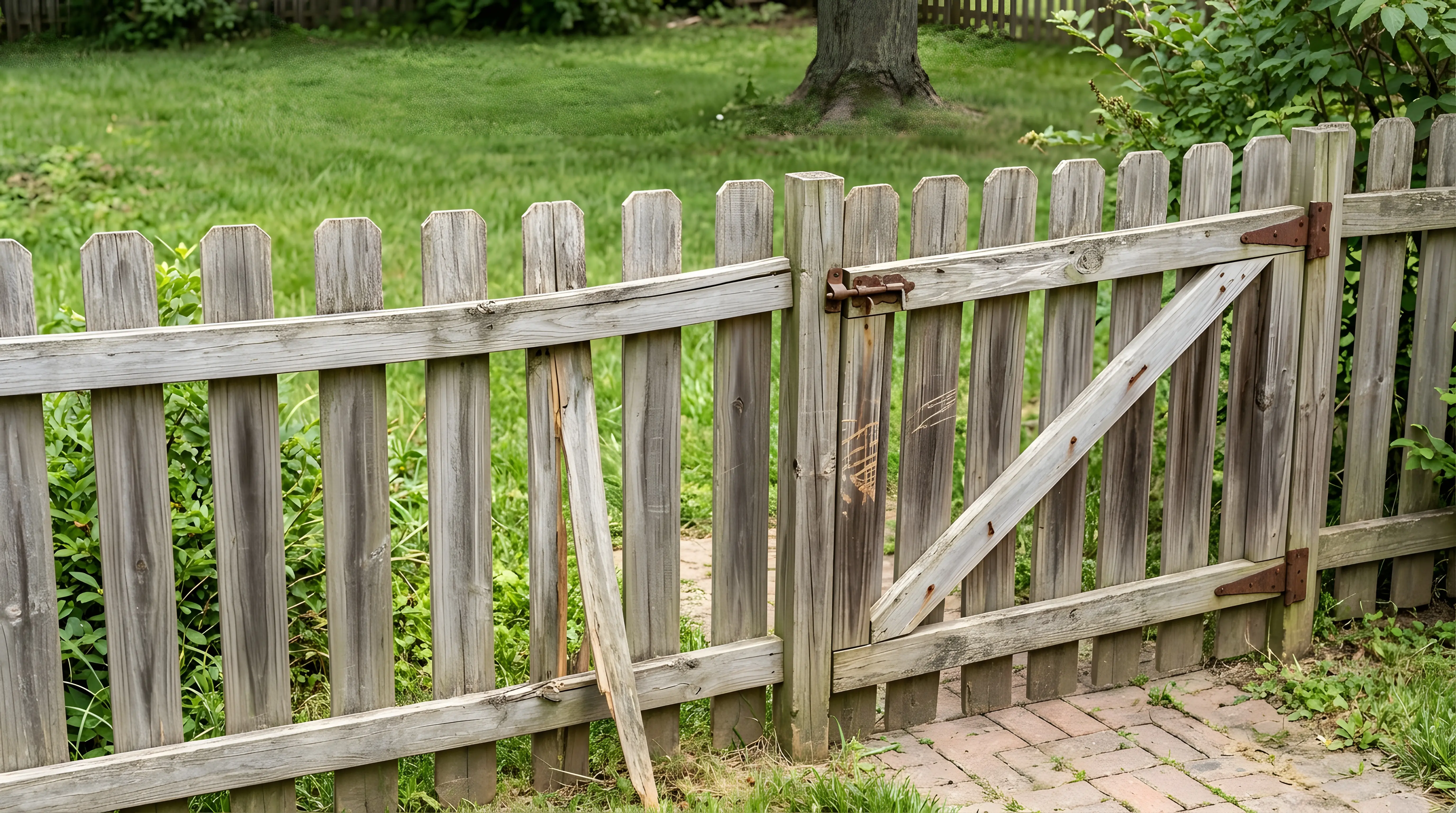
It usually starts small. One section of the fence tilts just a little, and it is easy to ignore. Then a storm rolls through, the lean gets worse, and suddenly a panel is pulling away from its neighbors or resting on the shrubs. A leaning fence is more than an eyesore. It can weaken the entire fence line, create gaps that let pets escape, and eventually lead to a collapse.
The good news is that a leaning fence is often a fixable problem, especially if you catch it early. Here is why fences start leaning, how to tell how serious the problem is, what can be done about it, and when replacement is the better choice.
Why a Leaning Fence Should Not Be Ignored
A fence works as a connected system. Posts hold up the rails, the rails hold the boards, and each section supports the ones around it. When one section leans, it puts extra stress on nearby posts and rails. Over time, that stress can spread, turning a single problem area into several.
A leaning fence can also:
- Create gaps where pets or small children can get through
- Reduce privacy and security
- Damage landscaping, sheds, or anything it leans against
- Fall during a storm and cause property damage
- Hurt curb appeal and make the property look neglected
Addressing the lean early is almost always easier and more affordable than waiting.
The Most Common Reasons Fences Start Leaning
1. Rotting Posts
Rot is one of the most common causes of a leaning fence. Posts sit in the ground, where soil and moisture are in constant contact with the wood. Over time, especially in humid East Texas weather, the base of a wood post can soften and decay. Once the post weakens at or below ground level, it can no longer hold the fence upright.
You may not see the damage above ground. A post can look fine from the top and still be rotting where it meets the soil.
2. Posts That Were Not Set Properly
How a fence post is installed has a huge impact on how long it stays straight. Posts that were not set deep enough, not secured well, or not aligned properly during installation are more likely to shift over time. Fences built quickly or without attention to detail often start leaning sooner.
3. Shifting Soil
Soil moves more than most people realize. In many parts of East Texas, soils can expand when wet and shrink when dry. Those seasonal changes can push and pull on fence posts. Sandy soils may also loosen around posts over time. As the soil shifts, posts can tilt and take the fence with them.
4. Poor Drainage
When water pools around fence posts after heavy rain, the soil softens and the posts stay damp. That combination weakens the support around the post and speeds up rot. Low spots in the yard, downspouts that drain toward the fence, and sprinklers that soak the fence line can all contribute.
5. Wind and Storms
Solid privacy fences act like a wall against the wind. During East Texas storms, strong gusts push against the fence, putting serious pressure on the posts. If the posts are already weakened, a single storm can cause a section to lean or fall. Falling branches and trees can also knock sections out of line.
6. Tree Roots
Trees growing close to a fence can cause problems over time. As roots grow, they can push against posts and shift them out of alignment. Trees can also drop branches onto the fence or lean into it as they grow.
7. Heavy Gates
Gate posts carry more weight and movement than any other posts in the fence. Every time the gate opens and closes, it puts stress on the post. Over time, that stress can cause the gate post to lean, which makes the gate sag, drag, or stop latching.
8. Vines, Plants, and Objects Against the Fence
Climbing vines may look nice, but they add weight and hold moisture against the wood. Heavy plants, stacked firewood, trash cans, or items leaning against the fence can also push it out of alignment over time.
9. Broken or Loose Rails
Rails, also called runners, connect the posts and hold the boards. If a rail breaks, comes loose, or rots at the connection, the fence section can sag or lean even if the posts are still standing.
10. Age
Even a well-built fence eventually reaches the end of its life. Years of sun, rain, humidity, and wind wear down the wood and hardware. An older fence that starts leaning in several places may simply be telling you it is time for replacement.
How to Tell How Serious the Lean Is
Not every leaning fence is an emergency. Here is how to gauge the problem:
Likely a minor issue if:
- Only one post or a short section is leaning
- The lean is slight and has not gotten worse
- The post feels solid when you push on it
- The rest of the fence is straight and in good condition
Likely a bigger problem if:
- Several sections are leaning
- The lean is getting worse over time
- The post moves easily when pushed
- The wood at the base of the post is soft or crumbling
- Rails are broken or pulling away from posts
- The fence is resting on something to stay upright
How to Check Your Fence Posts
A quick inspection can tell you a lot:
- Look at the fence line from one end to see where it bends or tilts.
- Push gently on the leaning section and nearby posts to see if they move.
- Check the base of each post where it meets the soil. Use a screwdriver to probe for soft wood.
- Look for gaps between the soil and the post, which may mean the post has shifted.
- Inspect rails and connections for breaks, rot, or loose fasteners.
- Watch for standing water near the fence after rain.
What You Can Do About a Leaning Fence
Temporary Bracing
If a section is leaning badly, temporary bracing can help prevent it from falling while you plan a permanent fix. Bracing is a short-term solution, not a repair, and should not be relied on for long.
Replace a Single Post
When one post has rotted or failed, replacing that post can often straighten the fence and restore strength to that section. This usually involves removing the damaged post, setting a new one, and reattaching the rails and boards.
Reset a Shifted Post
If a post has shifted but the wood is still in good condition, it may be possible to reset it. This depends on why it shifted in the first place. If the cause is soft soil or poor drainage, that issue may also need to be addressed.
Repair Rails and Connections
Broken or loose rails can be replaced or secured, helping the fence section sit straight again.
Fix the Gate Post
If the gate post is leaning, it often needs to be reinforced or replaced so the gate can hang properly. Adjusting hinges alone may not solve the problem if the post itself is failing.
Address the Root Cause
Fixing the lean without addressing the cause can lead to the same problem again. Redirecting downspouts, adjusting sprinklers, trimming trees, and removing vines can help protect your fence going forward.
A Note Before Digging
If any repair involves digging around fence posts, underground utility lines should be marked first. Calling 811 before you dig helps avoid damaging buried lines.
When a Leaning Fence Needs Replacement
Repairs make sense when problems are limited. Fence replacement is often the better choice when:
- Multiple posts are rotting or leaning
- Several sections of the fence are tilted
- Repairs keep coming back
- The boards and rails are also deteriorating
- Storm damage affected a large portion of the fence
- The fence is near the end of its life
In those situations, fixing one post at a time can become more expensive than replacing the fence. A new fence also gives you a chance to upgrade height, style, and gates.
How to Prevent Your Fence From Leaning
A strong fence starts with proper installation and continues with good care:
- Set posts correctly. Quality installation is the foundation of a fence that stays straight.
- Manage water. Keep downspouts and sprinklers from soaking the fence line, and fix low spots where water pools.
- Keep plants trimmed. Remove heavy vines and trim shrubs away from the boards.
- Watch your trees. Trim branches that hang over the fence and plan new trees away from the fence line.
- Do not lean heavy objects on the fence. Store items elsewhere.
- Protect the wood. Regular staining and sealing helps protect your fence from moisture and UV damage.
- Inspect after storms. Catch small issues before they spread.
What Not to Do With a Leaning Fence
- Do not push it back and hope it stays. Without fixing the cause, the fence will likely lean again.
- Do not rely on a fence leaning against a tree or shed. This can damage both the fence and whatever it is resting on.
- Do not ignore it until the next storm. Weakened sections are more likely to fall in high winds.
- Do not let pets or kids play near a badly leaning section. It could fall unexpectedly.
How Rise Decks & Fence Builds Fences That Stay Straight
At Rise Decks & Fence, a strong fence starts with a solid layout. Our installation process includes laying out corner posts, setting posts, and installing runners before boards and finishing details are added. We pay attention to the details that help a fence stand strong against East Texas weather.
When replacement is the right call, we remove the old fence and haul away the debris before building the new one. Our fence services include custom fence installation, fence replacement, privacy and security fencing, and custom gates and finishing details. We can also help protect your new fence with staining and sealing.
We serve homeowners in Tyler, Lindale, Canton, Athens, Jacksonville, and surrounding East Texas communities. Visit our FAQ page for more answers.
Leaning Fence FAQs
Why is my fence leaning after a storm?
Strong winds push against solid fences, and if the posts were already weakened by rot or shifting soil, a storm can cause them to tilt or fail.
Can a leaning fence be fixed without replacing it?
Often, yes. If only one post or section is affected, replacing or resetting the post and repairing rails may solve the problem.
How do I know if my fence post is rotting?
Check the base of the post where it meets the soil. Soft, crumbling, or spongy wood is a sign of rot.
Is a leaning fence dangerous?
It can be. A badly leaning fence may fall during storms or if someone pushes against it, so it should be addressed promptly.
Should I replace my whole fence if one section is leaning?
Not necessarily. If the rest of the fence is in good condition, repairing the leaning section may be enough. If several sections are failing, replacement may be the better value.


