




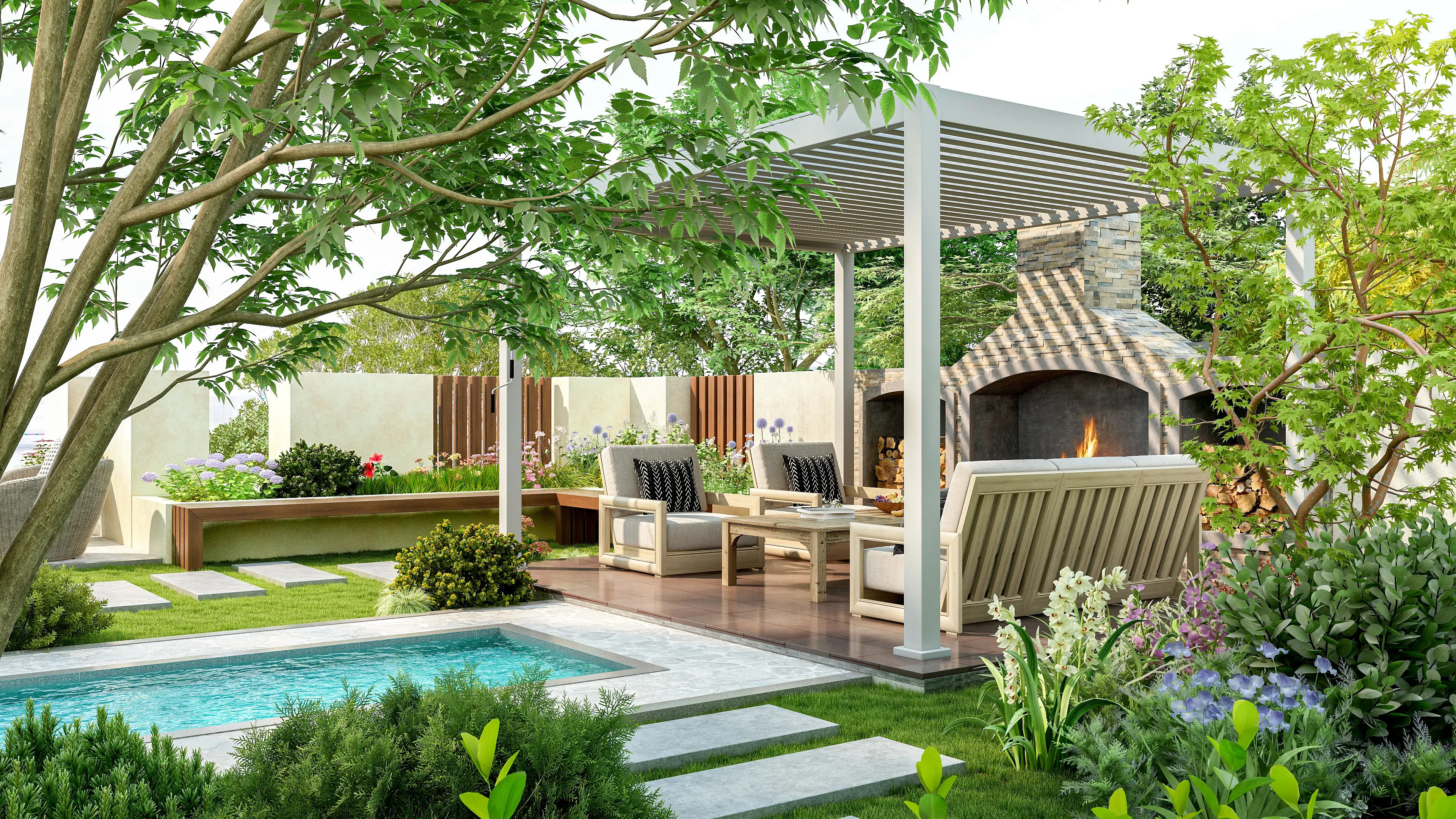
A pergola can transform a backyard, but only if it is in the right spot. Place it well, and it becomes the place everyone gravitates toward, with comfortable shade, a great view, and easy access from the house. Place it poorly, and it may sit in full sun at the times you want to use it, block a view, or feel disconnected from the rest of the yard.
Pergola placement deserves just as much thought as the design itself. Here is how to decide where to put a pergola in your backyard for the best shade, comfort, and flow.
Why Pergola Placement Matters
The location of your pergola affects:
- How much shade you get and when you get it
- How often you use the space
- How easily people move between the house, pergola, and yard
- Your views from both the pergola and the house
- Privacy from neighbors and the street
- How the pergola looks as part of your overall landscape
Start With the Sun
Understanding how the sun moves across your yard is one of the most important parts of pergola placement.
Morning Sun
The sun rises in the east. Areas on the east side of your home or yard get morning sun and are often shaded in the afternoon. A pergola on the east side may be a pleasant spot for morning coffee.
Afternoon Sun
The sun sets in the west, and afternoon sun in East Texas can be intense. Areas on the west side of your home or yard get the strongest late-day heat. A pergola positioned to block afternoon sun can make a big difference in comfort during summer.
Slat Direction
The direction the top slats of your pergola run affects how shade falls throughout the day. Your builder can help orient the slats to maximize shade during the times you are most likely to use the space.
Observe Your Yard
Spend a day noticing where the sun hits your yard in the morning, at midday, and in the late afternoon. This simple observation will help you choose the best pergola location.
Think About How You Will Use the Pergola
The purpose of your pergola should guide its placement:
- Outdoor dining: Place it close to the kitchen door for easy access.
- Lounging: Choose a quiet spot with a nice view.
- Entertaining: Position it where guests can easily gather and move around.
- Grilling: Keep it near the house but with safe clearance for heat and smoke.
- Poolside relaxing: Place it near the pool for shade between swims.
- Garden retreat: Set it among landscaping for a peaceful escape.
10 Great Places to Put a Pergola
1. Attached to the Back of the House
An attached pergola extends from your home and creates a shaded transition between indoors and outdoors. It is convenient, easy to access, and great for dining or lounging.
2. Over a Deck
Adding a pergola over a custom deck creates shade and defines an outdoor room on an existing surface.
3. Over a Patio
A pergola over a patio adds style and filtered shade to a space you may already use often.
4. As a Freestanding Destination
A freestanding pergola placed farther out in the yard creates a destination spot. It encourages people to explore and use more of the backyard.
5. In a Corner of the Yard
Corners are often unused spaces. A corner pergola creates a cozy, private retreat while keeping the center of the yard open.
6. Near the Pool
A pergola near the pool provides shade for lounge chairs and a resort-style feel.
7. In the Garden
A pergola surrounded by plants becomes a peaceful garden retreat. Climbing vines can grow over it for added shade.
8. Over a Walkway
A pergola over a path or garden entrance creates a welcoming transition between areas of the yard.
9. Near an Outdoor Kitchen
A pergola can define your outdoor cooking area and add partial shade for whoever is grilling.
10. Over a Fire Feature Area
A pergola can frame a fire pit or lounge area for cool evenings. Always follow safe clearance guidelines between fire features and the structure.
Other Factors to Consider
Views
Think about what you will see while sitting under the pergola. Position it to frame a nice view of your garden, trees, or yard. Also consider how the pergola will look from inside your house.
Privacy
If privacy matters, place the pergola away from neighbors’ windows or add privacy screens on one side. A pergola near a privacy fence can also feel more secluded.
Access and Flow
Make sure people can easily walk from the house to the pergola. Clear paths and short distances encourage frequent use. A pergola that is too far away or hard to reach may not get used as often.
Ground Conditions
The ground beneath the pergola should be stable and drain well. Avoid low spots where water collects after rain.
Trees
Trees provide natural shade, but they also drop leaves, sap, and branches. Placing a pergola directly under large trees can mean more cleanup and maintenance. Tree roots can also affect post placement.
Wind
Open areas may get more wind, which can affect comfort. Placing a pergola near the house, a fence, or landscaping can provide some shelter.
Setbacks and Easements
Your city or HOA may have rules about how close structures can be to property lines. Easements may also limit where you can build. Check these requirements before choosing a location.
Utilities
Before construction, underground utility lines should be marked by calling 811. Also look up for overhead power lines that could affect placement.
Test Your Placement Before You Build
Before finalizing your pergola location, try a simple test:
- Mark the corners of the pergola with stakes or flags.
- Place chairs or a table where the pergola will go.
- Sit there at different times of day.
- Notice the sun, shade, views, and privacy.
- Walk the path from the house to the pergola.
This helps you see how the space will feel before construction begins.
Common Pergola Placement Mistakes
- Ignoring sun direction. A pergola in the wrong spot may not provide shade when you need it.
- Placing it too far from the house. Distance can discourage use.
- Blocking views. A pergola can obstruct views from inside the home.
- Building in low, wet areas. Poor drainage can cause problems.
- Putting it under messy trees. Falling debris can mean constant cleanup.
- Skipping local rules. Setbacks and easements matter.
Caring for Your Pergola
Once your pergola is built, regular care helps it last. Staining and sealing protects the wood from UV exposure and moisture. Clear debris from the beams, trim plants and vines, and inspect hardware once a year.
Build Your Pergola With Rise Decks & Fence
At Rise Decks & Fence, we build custom patio covers and pergolas designed to fit your yard and the way you live. We visit your property, study the sun and layout, and help you choose the best pergola placement for shade, comfort, and flow. Many pergola projects can be completed in approximately 3 to 5 working days, depending on size, design, and site conditions.
We serve homeowners in Tyler, Lindale, Bullard, Murchison, Van, and surrounding East Texas communities. Visit our FAQ page for more answers.
Pergola Placement FAQs
Where is the best place to put a pergola?
The best place depends on how you will use it, where the sun hits, and how easily you can access it from the house.
Should a pergola face east or west?
It depends on when you want shade. Pergolas positioned to block west-facing afternoon sun can help most during East Texas summers.
Can I put a pergola under trees?
You can, but trees drop debris and may affect post placement. Consider maintenance before building under large trees.
How far from the house should a pergola be?
It depends on your goals. Attached or nearby pergolas are convenient, while freestanding pergolas farther out create a destination.


