




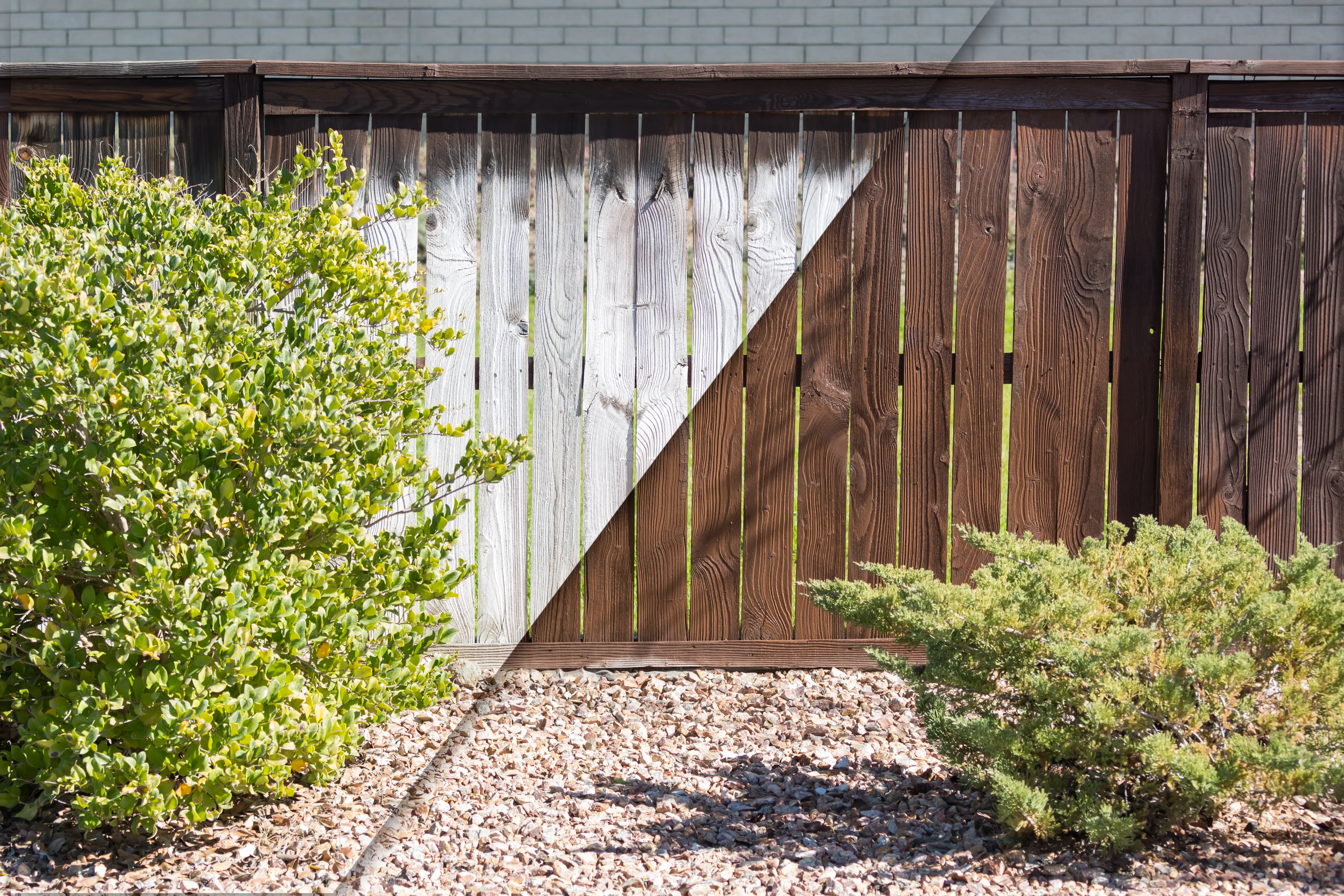
When a wood fence is new, it has a warm, rich color that adds instant curb appeal. But after a few years in the East Texas sun and humidity, that color can fade to a dull, silvery gray. The boards may look rough, stained, or tired, and the whole fence can start to drag down the look of your property.
Many homeowners assume a gray fence needs to be replaced. Often, it does not. If the structure is still solid, restoring a gray, weathered fence with cleaning, repairs, stain, and sealer can bring back its color and protect it for years to come. Here is how fence restoration works, how to tell if your fence can be saved, and how to keep it looking great afterward.
Why Wood Fences Turn Gray
Wood fences turn gray because of sun exposure. Ultraviolet light breaks down lignin, a natural compound near the surface of the wood. As the surface fibers weaken, the wood loses its color and turns gray. Rain then washes away loosened fibers, leaving a rough, weathered texture.
In East Texas, strong sun, humidity, and frequent rain speed up this process. Fences that face south or west often gray faster because they get the most direct sun.
Is a Gray Fence a Problem?
Graying itself is mostly a surface change. However, it is a sign that the wood is no longer protected from UV rays and moisture. Over time, unprotected wood can:
- Crack and split
- Become rough and splintery
- Absorb more moisture
- Develop mildew and algae
- Become more vulnerable to rot
Restoring and protecting a gray fence helps stop that progression and improves its appearance.
Can Your Fence Be Restored?
Good Candidates for Restoration
Your fence may be a good candidate if:
- The posts are solid and standing straight
- Most boards are intact
- Damage is mostly on the surface
- The fence is gray, faded, or stained
- Only a few boards or sections need repair
When Replacement May Be Better
Restoration may not be enough if:
- Many posts are rotting or leaning
- Large sections are damaged or falling
- Boards are soft or crumbling throughout
- Repairs would cost close to a new fence
An honest evaluation can help you decide whether restoration or replacement is the better investment.
The Fence Restoration Process
Step 1: Inspect the Fence
Walk the entire fence line and check posts, boards, rails, and gates. Look for leaning sections, loose boards, rot, and damaged hardware.
Step 2: Make Repairs
Before restoring the finish, fix any problems:
- Replace cracked, warped, or rotted boards.
- Secure loose boards and fasteners.
- Address leaning posts.
- Adjust or repair sagging gates.
Step 3: Clear the Fence Line
Trim plants, shrubs, and vines away from the fence. Clear soil, mulch, and debris from the base so the bottom of the boards can be cleaned and finished.
Step 4: Clean the Fence
Cleaning removes dirt, gray surface fibers, mildew, and algae so the stain can bond with the wood. A cleaner designed for wood and a soft brush can help. Many professionals also use products designed to brighten weathered wood after cleaning, which can help restore a more even appearance before staining.
A Note About Pressure Washing
Pressure washing can help clean a fence, but too much pressure can damage the wood, leaving it fuzzy and rough. If you pressure wash, use low pressure and keep the nozzle at a safe distance.
Step 5: Let the Fence Dry
Wood must be completely dry before staining. In East Texas humidity, this may take longer than you expect. Staining damp wood can lead to poor absorption and peeling.
Step 6: Choose the Right Stain
Weathered fences often look best with a stain that has enough pigment to even out color differences. Semi-transparent stains add color while showing some grain. Solid stains provide more coverage and can help hide discoloration and mismatched boards. Your contractor can help you choose a finish that fits your fence’s condition and your style.
Step 7: Test the Color
Test the stain on a small, less visible area. Weathered wood can absorb stain differently than new wood, so testing helps you see the true color.
Step 8: Apply the Stain and Sealer
Apply stain evenly to the boards, rails, posts, and gates. Make sure to cover the bottoms of boards and any exposed ends. Follow the product’s instructions for coats and dry times.
Step 9: Allow the Finish to Cure
Give the stain time to dry and cure before turning sprinklers back on or allowing plants to touch the fence.
Staining Both Sides of the Fence
Ideally, both sides of a fence should be protected. However, the outside of your fence may face a neighbor’s yard. If you want both sides stained, talk with your neighbor and get permission to access their side. Many neighbors appreciate a refreshed fence as much as you do.
Choosing a Color for a Weathered Fence
When choosing a stain color, consider:
- Your home’s exterior colors and trim
- Your deck, pergola, or patio cover for a coordinated look
- How much discoloration you want to hide
- Neighborhood or HOA guidelines on fence colors
Mid-tone and warm wood colors are popular because they look natural and help even out weathered surfaces.
What to Expect From Fence Restoration
A restored fence can look dramatically better, with richer color and a more uniform appearance. Keep in mind that weathered wood will still have some natural texture and character. The goal is to bring back color, improve appearance, and protect the wood going forward.
Best Time to Restore a Fence in East Texas
Stain performs best on clean, dry wood in mild weather. Mid-to-late spring and early-to-mid fall often offer the best conditions. Avoid staining in extreme heat, direct midday sun, or right before rain.
Keeping Your Restored Fence Looking New
- Restain regularly. Many fences need a fresh coat every two to three years, depending on sun exposure.
- Keep sprinklers off the fence.
- Trim plants and vines away from the boards.
- Clean off dirt and mildew as needed.
- Inspect posts and gates once or twice a year.
- Repair problems quickly.
DIY or Professional Fence Restoration?
Fence restoration takes time, especially on long fence lines. Cleaning, drying, repairs, and staining can take several days and depend on good weather. Professionals can handle the prep and application efficiently and help ensure the finish bonds well and lasts.
Restoration vs. Replacement: Making the Smart Choice
If your fence is structurally sound, restoration is often a cost-effective way to extend its life and improve curb appeal. If posts and boards are failing throughout, replacement may provide better long-term value. Our fence services include both fence replacement and new installation when restoration is not the right fit.
Restore Your Fence With Rise Decks & Fence
At Rise Decks & Fence, our staining and sealing services help protect the investment you have already made. We restore gray, weathered fences with careful preparation and quality finishes designed to handle East Texas sun and moisture. If we find damage, we will let you know and help you decide whether repair, restoration, or replacement makes the most sense.
We also stain and seal decks, pergolas, and patio covers, so your entire outdoor space can look fresh and coordinated. Planning more upgrades? We build custom decks too.
We serve homeowners in Tyler, Lindale, Bullard, Canton, Athens, and surrounding East Texas communities. Learn more about us on our About page or visit our FAQ page.
Gray Fence Restoration FAQs
Can a gray fence be restored?
Often, yes. If the posts and boards are structurally sound, cleaning, repairs, and stain can restore color and protection.
Why did my fence turn gray?
Sun exposure breaks down the surface of the wood, causing it to lose color and turn gray.
What stain is best for a weathered fence?
Stains with more pigment, like semi-transparent or solid stains, can help even out discoloration on weathered wood.
Do I need to clean my fence before staining?
Yes. Cleaning removes gray surface fibers, dirt, and mildew so the stain can bond properly.
How often should I restain my fence?
Many fences need a fresh coat every two to three years, depending on sun exposure and weather.


