




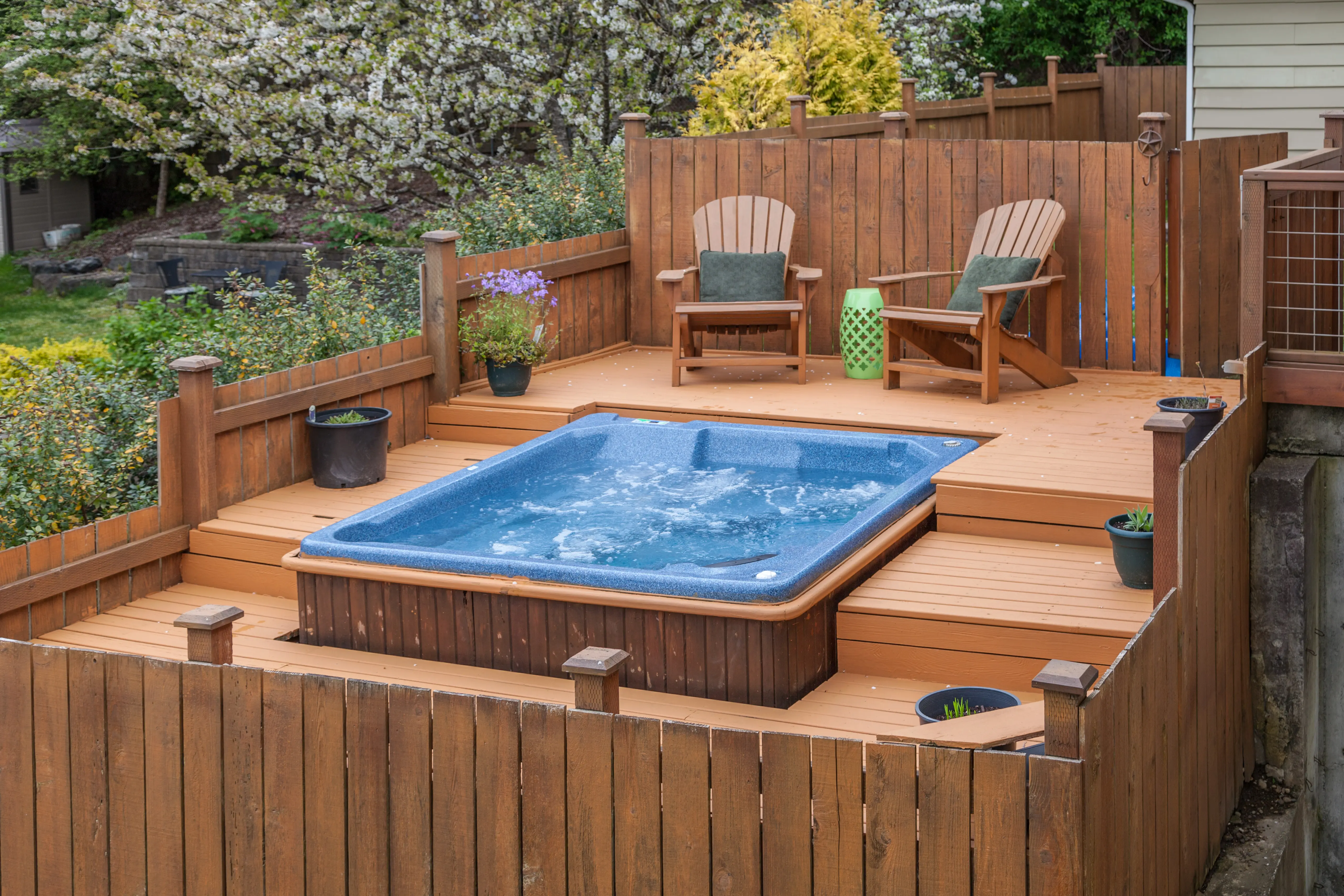
A hot tub can turn your backyard into a personal retreat. After a long day, there is nothing quite like sinking into warm water under the stars. Many homeowners dream of placing their hot tub on a deck, where it feels connected to the rest of the outdoor living space and is easy to reach from the house.
But a hot tub is not like a piece of patio furniture. It is extremely heavy, uses water and electricity, and needs proper support, access, and planning. A deck that was not designed for a hot tub can be overloaded and unsafe. Here is what homeowners need to know before planning a deck for a hot tub, from structural support and placement to privacy, safety, and maintenance.
Why Hot Tubs Need Special Planning
When filled with water and people, a hot tub can weigh thousands of pounds. That weight is concentrated in a relatively small area. A standard deck designed for people, furniture, and grills is usually not built to carry that kind of load without additional support.
Placing a hot tub on a deck that was not designed for it can lead to:
- Sagging boards and joists
- Stress on posts and footings
- Damage to the deck structure
- Serious safety risks
That is why a hot tub deck must be planned and built specifically for the weight it will carry.
Can You Put a Hot Tub on an Existing Deck?
Sometimes, but not without careful evaluation. If you want to add a hot tub to an existing deck, the structure needs to be assessed to determine whether it can support the weight. In many cases, the deck would need additional support or reinforcement. Never place a hot tub on an existing deck without having the structure evaluated first.
Hot Tub Deck Options
There are several ways to incorporate a hot tub into a deck design.
Option 1: Hot Tub on Top of the Deck
The hot tub sits on the deck surface. This option requires the deck to be designed and built with additional support beneath the hot tub area to handle the weight.
Option 2: Recessed or Inset Hot Tub
The hot tub is set partially or fully into the deck so the top of the tub sits closer to the deck surface. This creates a sleek, built-in look and makes it easier to step in and out. The hot tub often sits on a separate solid base below while the deck is built around it.
Option 3: Deck Built Around a Ground-Level Hot Tub
The hot tub sits on its own solid base at ground level, and a deck is built around it. This approach keeps the heavy load off the deck structure while still creating a seamless look.
Option 4: Hot Tub on Its Own Deck Level
On a multi-level deck, the hot tub can have its own dedicated level, designed specifically for its weight. This creates separation from dining and lounging areas.
Your builder can help you choose the best option based on your yard, budget, and goals.
Structural Considerations
Proper Support
The area under the hot tub must be designed to carry the full weight of the tub, water, and people. This often involves additional footings, posts, beams, and joists, or a separate solid base.
Manufacturer Requirements
Hot tub manufacturers typically provide guidelines for the type of base the tub needs. Share these requirements with your builder so the deck is designed accordingly.
Professional Design
A hot tub deck is not a do-it-yourself guessing game. Work with an experienced builder who understands load requirements, and confirm whether your city requires permits or engineering for your project.
Placement Considerations
Distance From the House
A hot tub close to the back door is convenient, especially on cool evenings. Shorter walks mean less time in the cold and less water tracked indoors.
Privacy
Think about who can see the hot tub area. Neighbors’ windows, the street, and nearby homes all affect privacy. Privacy screens, a privacy fence, or a pergola with side panels can help.
Views
Position the hot tub to enjoy the best views of your yard, the sky, or the landscape.
Sun and Shade
In East Texas, afternoon sun can be intense. A pergola or patio cover over the hot tub can provide shade and make daytime soaking more comfortable. If you add a cover, make sure there is enough clearance for the hot tub’s cover lift.
Trees
Placing a hot tub under trees can mean more leaves and debris in the water. Consider how much cleanup you are willing to do.
Access for Delivery
Hot tubs are large and heavy. Make sure there is a clear path for delivery to the hot tub location.
Electrical Considerations
Hot tubs require electrical power, and electrical work must be done safely and correctly. Electrical installation should be handled by a licensed electrician following local codes. Plan the electrical setup early so it can be coordinated with the deck design.
Access for Maintenance
Hot tubs need regular maintenance and occasional repairs. Plan for:
- Access panels so technicians can reach the hot tub’s equipment
- Room around the tub for cleaning and maintenance
- Clearance for the cover and cover lift
- Access to drains for water changes
A recessed hot tub, in particular, needs careful planning so equipment can be reached when needed.
Water, Moisture, and Drainage
Hot tubs bring splashing, dripping, and occasional overflow. Plan for:
- Proper drainage away from the deck and house
- Wood protection with regular staining and sealing
- Ventilation under the deck so moisture does not stay trapped
- Cleaning up spills of hot tub chemicals
Moisture is one of the biggest threats to a hot tub deck, so drainage and wood protection are especially important.
Safety Considerations
- Steps and handrails make it easier and safer to get in and out of the hot tub.
- Slip resistance matters because wet surfaces can be slippery.
- Lighting helps with nighttime use.
- Locking covers help keep children safe when the hot tub is not in use.
- Barrier requirements may apply. Some cities have rules about fencing or barriers around hot tubs and spas. Check local requirements.
- Supervision of children is always important.
Design Ideas for Hot Tub Decks
- Built-in benches around the hot tub for towels and seating
- Storage for towels, chemicals, and supplies
- Privacy screens on one or two sides
- A pergola overhead with string lights
- A step-down level that separates the hot tub from the main deck
- Planters to soften the space
- A towel hook or rack near the tub
Common Hot Tub Deck Mistakes
- Placing a hot tub on a deck not built for it
- Ignoring manufacturer base requirements
- Forgetting access panels for maintenance
- Not planning for electrical work early
- Ignoring privacy
- Poor drainage and moisture management
- Not checking local barrier rules
Caring for Your Hot Tub Deck
- Inspect the deck regularly for signs of sagging or moisture damage.
- Restain and seal the wood as needed.
- Clean up spills and chemicals promptly.
- Keep the area under the deck ventilated and clear of debris.
- Check steps, handrails, and boards for wear.
Build Your Hot Tub Deck With Rise Decks & Fence
At Rise Decks & Fence, we build custom decks designed around your vision and built with the strength and details your project requires. If you are planning a hot tub, let us know early so we can design the deck to support it properly. We can also add privacy fences, pergolas, and patio covers to create a complete backyard retreat.
We start with a conversation and rough estimate, then visit your property for measurements and design details. You stay involved throughout the process, with clear communication and a team that listens.
We serve homeowners in Tyler, Lindale, Bullard, Flint, Mabank, and surrounding East Texas communities. Learn more about us on our About page or visit our FAQ page.
Hot Tub Deck FAQs
Can a deck support a hot tub?
A deck can support a hot tub if it is specifically designed and built for the weight. Standard decks usually need additional support.
Can I put a hot tub on my existing deck?
Only after the structure is evaluated. Many existing decks would need reinforcement.
Should my hot tub be recessed into the deck?
Recessed hot tubs look sleek and are easier to step into, but they require careful planning for support and maintenance access.
Do I need an electrician for a hot tub?
Yes. Electrical work should be handled by a licensed electrician following local codes.
Can I add a pergola over my hot tub?
Yes. A pergola adds shade and privacy. Make sure there is enough clearance for the hot tub cover.


