




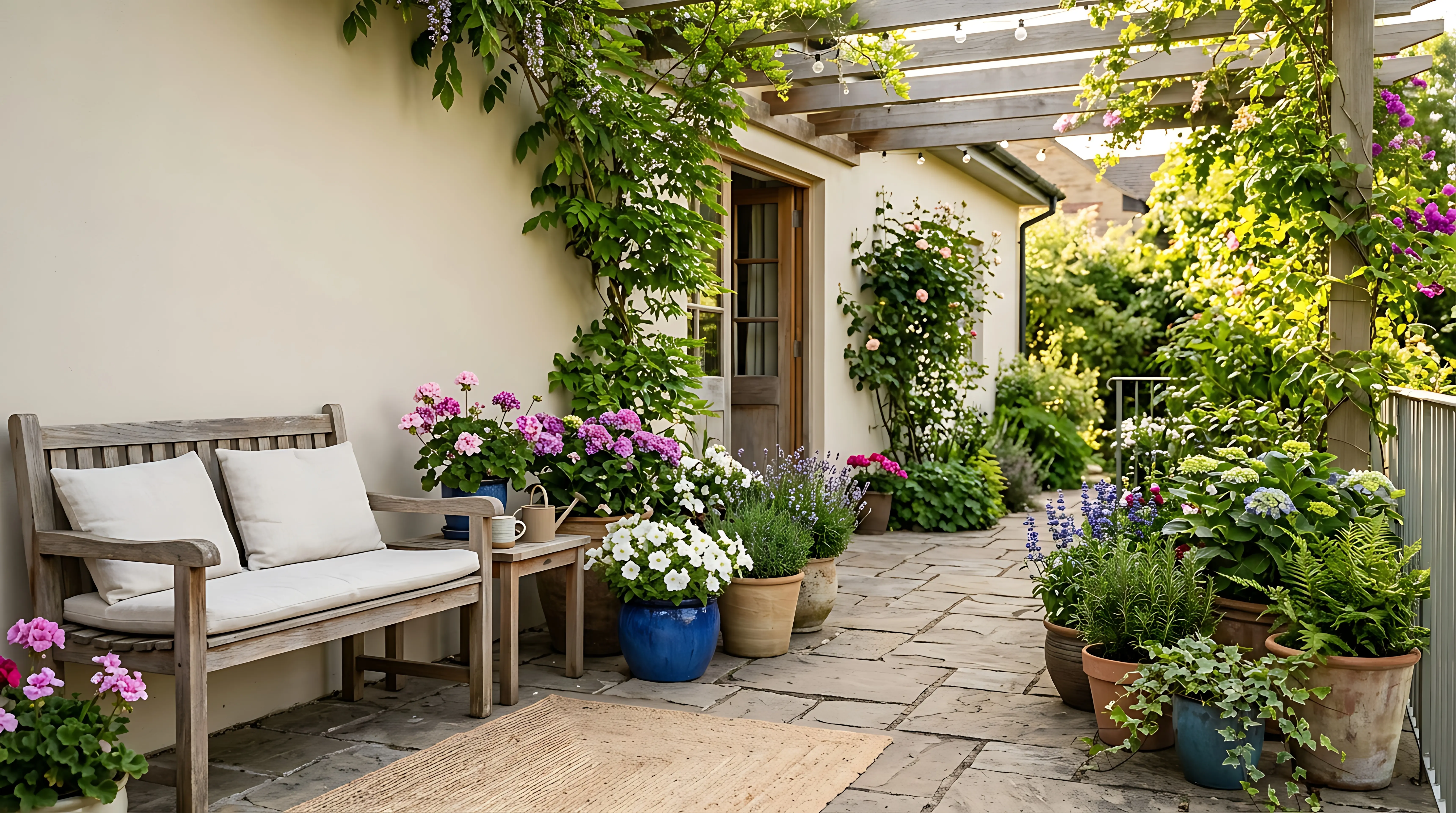
There is something magical about a pergola covered in green leaves and colorful blooms. Climbing plants soften the structure’s lines, add natural shade, attract butterflies and hummingbirds, and turn your backyard into a living garden room. For many homeowners, a vine-covered pergola is the dream.
But growing climbing plants on a pergola takes planning. The structure needs the right supports, the plants need to suit East Texas weather, and the wood needs protection from the moisture that vines can trap. Here are pergola ideas for growing climbing plants and vines, along with plant suggestions and tips for keeping your pergola healthy for years.
Benefits of Growing Vines on a Pergola
- Natural shade that increases as the vines fill in
- Beauty and color from leaves and flowers
- Privacy when vines cover the sides
- Fragrance from flowering vines
- Pollinators like butterflies, bees, and hummingbirds
- A cooler feel in the space underneath
Pergola Design Ideas for Climbing Plants
1. Closer Top Slats
Closer slat spacing on top gives vines more surfaces to grab onto as they spread across the pergola.
2. Lattice on Top
Adding lattice across the top of the pergola creates a grid that helps vines spread evenly and fill in faster.
3. Trellis Panels on the Posts
Trellis panels attached to the posts give vines a path to climb from the ground to the top of the pergola.
4. Cable or Wire Support Systems
Stainless steel cables or wires stretched between posts and beams provide a clean, modern support system for vines.
5. Planter Boxes at the Base
Built-in planter boxes at the base of each post give vines a defined place to grow and keep soil away from the wood.
6. Overhead Crossbars
Additional crossbars on top of the pergola give heavier vines more support.
7. Arbor-Style Entry Pergola
A smaller pergola over a garden path or entrance becomes a beautiful arbor when covered with climbing plants.
8. A Stronger Structure for Heavy Vines
Some vines become very heavy as they mature. If you plan to grow vigorous vines, let your builder know so the pergola can be designed to handle the extra weight.
9. Vine-Free Zones
Keep vines away from areas where they could cause problems, such as gutters, roofs, and the walls of your home.
10. Easy Access for Pruning
Design the pergola so you can reach the top and sides for pruning and maintenance.
Choosing Climbing Plants for East Texas
The best vines for your pergola depend on sun exposure, how much maintenance you want, and how fast you want coverage. A local nursery or your county extension office can help you choose plants that thrive in your area. Here are some vines East Texas homeowners often consider:
Crossvine
A native vine with trumpet-shaped flowers that attract hummingbirds. It is often semi-evergreen and handles heat well.
Coral Honeysuckle
A native honeysuckle with red or orange tubular flowers that hummingbirds love. It is less aggressive than non-native honeysuckles.
Carolina Jessamine
A popular vine with fragrant yellow flowers in late winter and early spring. Note that all parts of this plant are toxic if eaten, so consider this if you have children or pets.
Climbing Roses
Climbing roses add beauty and fragrance. Some varieties are well suited to Texas heat.
Passionflower
A native passionflower produces unique, striking blooms and attracts butterflies.
Star Jasmine
Known for its sweet fragrance and glossy leaves. It may be affected by hard freezes, so ask your local nursery about how it performs in your area.
Muscadine Grapes
Native grapes can create a shaded, productive pergola. Keep in mind that fruit can drop and create a mess, so placement matters.
American Wisteria
A native wisteria that is generally less aggressive than Asian species, with beautiful purple blooms.
Vines to Approach With Caution
Some vines grow aggressively, become very heavy, or can spread into areas where they are not wanted. Use caution with:
- Chinese and Japanese wisteria, which can become extremely heavy and invasive
- Japanese honeysuckle, which spreads aggressively
- Trumpet vine, which is vigorous and can spread through roots and seeds
- English ivy, which can be invasive and damage structures
Ask a local nursery for guidance on vines that are well behaved in your area.
Protecting Your Pergola From Vine Damage
Vines are beautiful, but they can hold moisture against the wood and add weight. Protect your pergola by:
Staining and Sealing Before Planting
Apply a protective finish before vines grow over the structure. Once vines cover the pergola, restaining becomes much more difficult. Learn more about our staining and sealing services.
Using Supports That Keep Vines Off the Wood
Trellis panels, cables, and wires can keep vines slightly away from the wood surfaces, allowing better airflow.
Pruning Regularly
Regular pruning keeps vines from becoming too heavy and allows air to circulate.
Inspecting the Structure
Check the pergola at least once a year for signs of moisture damage, rot, or loose connections.
Keeping the Base Clear
Keep mulch and soil away from the bottom of the posts to prevent moisture damage.
Placement Tips
Match Plants to Sun Exposure
Most flowering vines bloom best with plenty of sun. Choose plants that suit the amount of sun your pergola gets.
Consider Debris
Flowers, leaves, and fruit will fall. Avoid placing heavily flowering or fruiting vines over pools, dining tables, or areas where debris would be a problem.
Think About Bees
Flowering vines attract pollinators. If you have allergies or plan to dine under the pergola often, consider plant choices carefully.
Caring for a Vine-Covered Pergola
- Prune vines regularly to control size and weight.
- Train young vines by tying them gently to supports.
- Water and feed plants as needed.
- Clear fallen leaves and flowers.
- Inspect the pergola for moisture damage.
- Restain exposed wood as needed.
Common Mistakes With Pergola Vines
- Planting before staining the pergola
- Choosing invasive or overly heavy vines
- Letting vines grow onto the house or gutters
- Skipping regular pruning
- Placing messy vines over dining or pool areas
- Ignoring moisture damage hidden under the vines
How Long Does It Take to Build a Pergola?
Many pergola projects can be completed in approximately 3 to 5 working days, depending on size, design, materials, and site conditions.
Build Your Garden Pergola With Rise Decks & Fence
At Rise Decks & Fence, we build custom patio covers and pergolas designed to fit your backyard and the way you want to live. If you dream of a vine-covered pergola, we will help you plan the right structure, supports, and finish so your plants and pergola can thrive together. We can also build a pergola over a custom deck or patio.
We serve homeowners in Tyler, Lindale, Bullard, Flint, Brownsboro, and surrounding East Texas communities. Learn more about us on our About page or visit our FAQ page.
Pergola Vine FAQs
What are the best vines for a pergola in East Texas?
Native and well-adapted vines like crossvine, coral honeysuckle, and passionflower are popular. A local nursery can help you choose.
Can vines damage a pergola?
Vines can hold moisture against the wood and add weight. Staining, pruning, and good supports help prevent damage.
Should I stain my pergola before planting vines?
Yes. It is much easier to stain before vines cover the structure.
How long does it take for vines to cover a pergola?
It depends on the plant and growing conditions. Some vines fill in within a few seasons, while others take longer.
Which vines should I avoid?
Use caution with aggressive or heavy vines like Chinese and Japanese wisteria, Japanese honeysuckle, and English ivy.


