




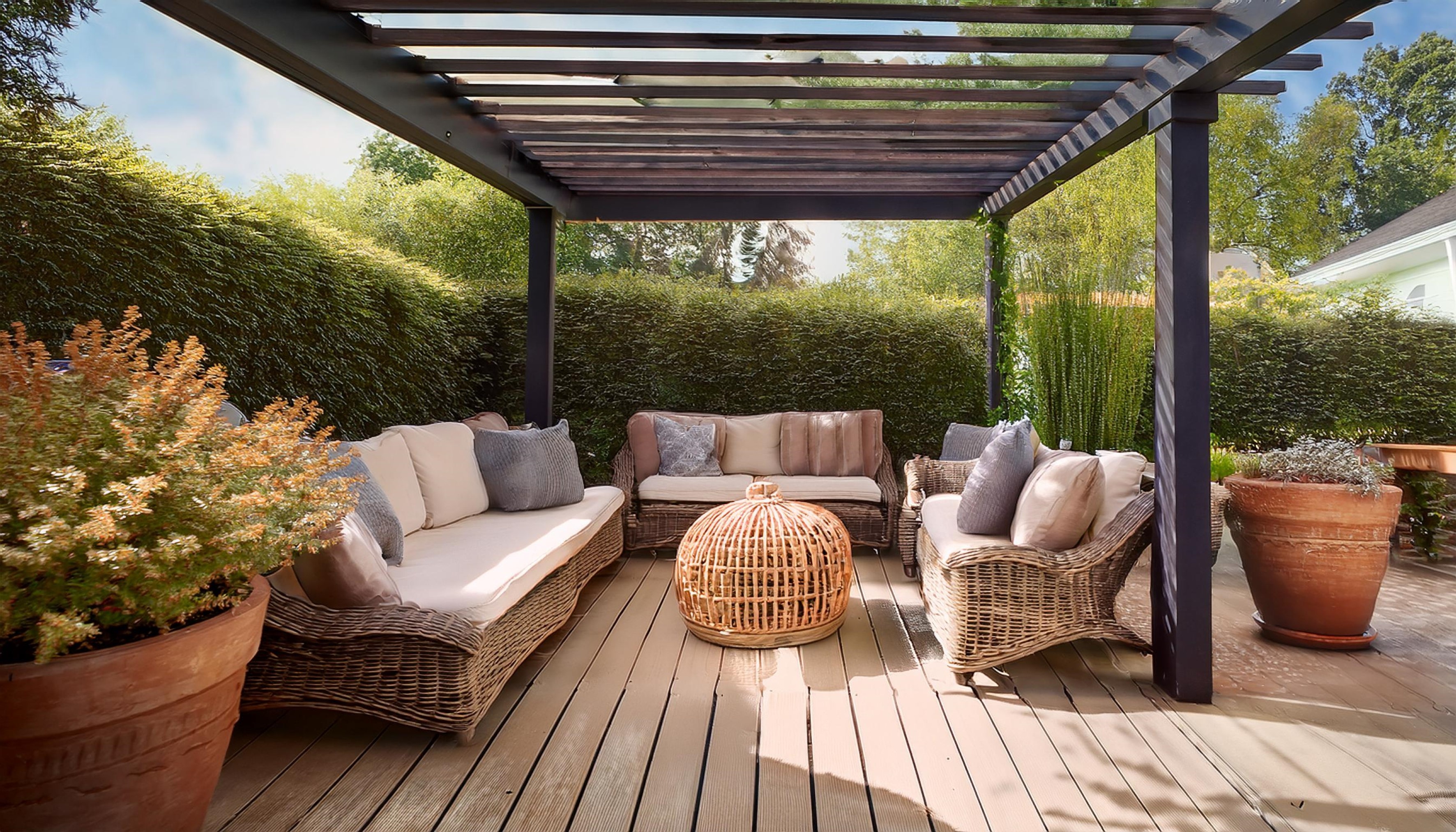
A patio cover should look like it belongs. When it matches your home’s style, it feels like part of the original design: a natural extension of your roofline, your exterior, and your personality. When it does not, it can look like an afterthought tacked onto the back of the house.
The difference often comes down to design details. Roof shape, post style, beam size, trim, and stain color all play a role in how well a patio cover blends with your home. Here are patio cover design ideas for popular home styles across East Texas, along with tips for creating a seamless, built-in look.
Why Matching Your Home’s Style Matters
A well-designed patio cover does more than provide shade. It can:
- Boost curb appeal by making your home look cohesive and finished
- Feel like a natural extension of your indoor living space
- Add value by enhancing your home’s overall design
- Create a more inviting outdoor space you will want to use
A patio cover that clashes with your home’s style can do the opposite, making the space feel disconnected and less appealing.
The Design Elements That Make a Patio Cover Match
Before looking at specific styles, it helps to understand the design elements that shape how a patio cover looks.
Roof Style
The shape of the roof has a big impact on the overall look. Common patio cover roof styles include:
- Gable roofs with a peaked, triangular shape
- Hip roofs with slopes on all sides
- Shed or lean-to roofs with a single slope attached to the house
- Flat or low-slope roofs for a clean, modern look
Matching or complementing your home’s existing roof style is one of the best ways to create a cohesive design.
Roof Pitch
The angle of the roof should feel consistent with your home. A patio cover with a pitch that is too flat or too steep compared to your main roof can look out of place.
Posts and Columns
Posts can be simple and slim, thick and substantial, or wrapped and detailed. The size and style of the posts should suit your home’s architecture and scale.
Beams
Beam size and finish affect how heavy or light the structure feels. Larger beams create a bold, substantial look, while slimmer beams feel more streamlined.
Trim and Fascia
Trim, fascia boards, and finishing details give a patio cover a polished appearance. Matching trim to your home’s exterior helps tie everything together.
Stain or Color
The finish color can blend the patio cover with your home or create an intentional contrast. Wood tones, painted finishes, and stains that echo your exterior colors all create different looks.
Ceiling Finish
What you see when you look up matters too. Exposed rafters, a finished ceiling, or a stained wood ceiling all create different moods under the cover.
Patio Cover Design Ideas by Home Style
Traditional and Ranch-Style Homes
Ranch-style and traditional homes are common throughout East Texas. These homes often feature long, low rooflines and brick or siding exteriors.
Design ideas:
- Extend the existing roofline with a matching shed or gable patio cover.
- Use roof pitch and roofing that complement the main house.
- Choose sturdy posts sized in proportion to the home.
- Match trim and fascia to the home’s existing exterior.
- Use a warm stain or paint color that coordinates with brick or siding.
The goal is to make the patio cover look like it was built with the house.
Farmhouse-Style Homes
Farmhouse homes are known for their warm, welcoming character, often with board-and-batten siding, porches, and natural wood accents.
Design ideas:
- Use a gable roof with exposed beams for a classic farmhouse look.
- Choose thick, substantial posts with simple detailing.
- Highlight natural wood tones with a warm stain.
- Add an exposed rafter ceiling for rustic charm.
- Pair the cover with lantern-style lighting and a ceiling fan.
A farmhouse patio cover should feel inviting, relaxed, and timeless.
Modern and Contemporary Homes
Modern homes feature clean lines, simple shapes, and minimal ornamentation.
Design ideas:
- Choose a flat or low-slope roof for a sleek profile.
- Use slim, simple posts with clean edges.
- Keep trim minimal and streamlined.
- Choose neutral or darker finishes that match the home’s exterior.
- Consider a smooth finished ceiling for a polished look.
The goal is a patio cover that feels light, crisp, and uncluttered.
Craftsman-Style Homes
Craftsman homes are known for their handcrafted details, tapered columns, and exposed structural elements.
Design ideas:
- Use tapered or wrapped columns to echo the home’s porch details.
- Highlight exposed rafter tails and beams.
- Choose earthy stain colors that suit the home’s palette.
- Add decorative brackets or trim details for character.
- Use a gable roof that complements the main roofline.
A craftsman patio cover celebrates the details and craftsmanship that define the style.
Rustic and Lodge-Style Homes
Rustic homes on larger East Texas properties often feature natural materials, heavy timbers, and a strong connection to the outdoors.
Design ideas:
- Use heavy beams and thick posts for a bold, timber-frame feel.
- Choose rich, dark stain colors.
- Leave the ceiling open with exposed beams.
- Pair the cover with a stone fire feature or rustic furniture.
- Let the structure blend into wooded surroundings.
A rustic patio cover should feel strong, natural, and grounded.
Brick Homes
Many East Texas homes have brick exteriors. A patio cover on a brick home should complement the color and texture of the brick.
Design ideas:
- Choose stain or paint colors that coordinate with the brick tones.
- Use trim colors that match the home’s existing trim.
- Match roof style and pitch to the main roof.
- Consider posts that are sized to feel substantial next to masonry.
Two-Story Homes
Patio covers on two-story homes need careful planning to look proportional. The cover must work with second-story windows and rooflines.
Design ideas:
- Use a shed roof that attaches below second-story windows.
- Keep the cover proportional to the size of the home.
- Match trim and finish colors to the main house.
- Consider a slightly taller cover for an open, airy feel.
Attached vs. Freestanding Patio Covers
Attached Patio Covers
An attached patio cover connects to your home and is often the best choice for creating a seamless look. When designed to match your roofline and exterior, it looks like part of the original house.
Freestanding Patio Covers
A freestanding patio cover stands on its own and can be placed anywhere in the yard. It does not have to match the house as closely, but it should still complement your home’s style. Freestanding covers work well over a pool area, fire pit, or detached seating area.
Design Details That Elevate Any Patio Cover
No matter your home’s style, these details can make a patio cover feel more custom and polished:
- Exposed rafters for character and depth
- Finished ceilings for a clean, room-like feel
- Wrapped posts for a substantial, high-end look
- Decorative brackets for craftsmanship and detail
- Ceiling fans for comfort on hot days
- Lighting for evening use and ambiance
- Gutters that direct rainwater away from the patio
- Coordinated stain colors that tie the cover to your home and deck
How to Choose the Right Patio Cover Design
When planning your patio cover, consider:
- Your home’s architecture. What style is your home, and what features define it?
- Your roofline. How will the cover connect to or complement the main roof?
- Your exterior colors and materials. What finishes will blend with brick, siding, or stone?
- How you will use the space. Dining, lounging, entertaining, or cooking?
- Sun exposure. Where does the sun hit, and how much shade do you need?
- Your budget. Which design features matter most to you?
A builder who listens to your goals can help you balance style, function, and budget.
Common Patio Cover Design Mistakes to Avoid
- Ignoring the existing roofline. A mismatched roof can look out of place.
- Choosing posts that are too thin or too bulky. Posts should be proportional to the home and the cover.
- Mismatched colors. Stain or paint that clashes with your exterior can make the cover look like an afterthought.
- Forgetting drainage. Rainwater needs a clear path away from the patio and foundation.
- Making the cover too small. It should be large enough to shade the space you plan to use.
- Skipping finishing details. Trim and details are what make a patio cover look custom.
Pergola or Patio Cover?
If you want filtered shade and an open-air feel, a pergola may be a better fit for part of your space. Pergolas can also be designed to complement your home’s style, from rustic timber designs to clean modern lines. Some homeowners combine a patio cover near the house with a pergola extending into the yard.
Protecting Your Patio Cover
Once your patio cover is built, regular care keeps it looking its best. If your cover includes wood components, staining and sealing helps protect them from UV exposure, humidity, and rain. Keep gutters and drainage clear, and inspect the structure once a year.
How Long Does It Take to Build a Patio Cover?
Many patio cover projects can be completed in approximately 3 to 5 working days, depending on size, design, materials, and site conditions.
Design Your Patio Cover With Rise Decks & Fence
At Rise Decks & Fence, we build custom patio covers and pergolas designed to protect your outdoor space and complement your home’s style. We take time to understand your home’s architecture, your vision, and how you want to use the space. From roofline to finishing details, we focus on the craftsmanship that makes a patio cover look like it belongs.
We can also build a patio cover over a new or existing custom deck to create a complete outdoor living space.
We serve homeowners in Tyler, Lindale, Bullard, Flint, Jacksonville, and surrounding East Texas communities. Learn more about us on our About page or visit our FAQ page.
Patio Cover Design FAQs
How do I make my patio cover match my house?
Match or complement your roof style and pitch, choose posts and beams that suit your home’s scale, and coordinate trim and finish colors with your exterior.
What is the best roof style for a patio cover?
It depends on your home. Gable, hip, shed, and flat roofs can all work well when they complement your home’s architecture.
Should my patio cover be attached or freestanding?
Attached covers often create the most seamless look, while freestanding covers offer flexibility for placement in the yard.
Can a patio cover match a brick home?
Yes. Choosing stain or paint colors that coordinate with the brick and matching trim to the home helps create a cohesive look.
How long does it take to build a patio cover?
Many patio cover projects take approximately 3 to 5 working days, depending on size, design, and site conditions.


