




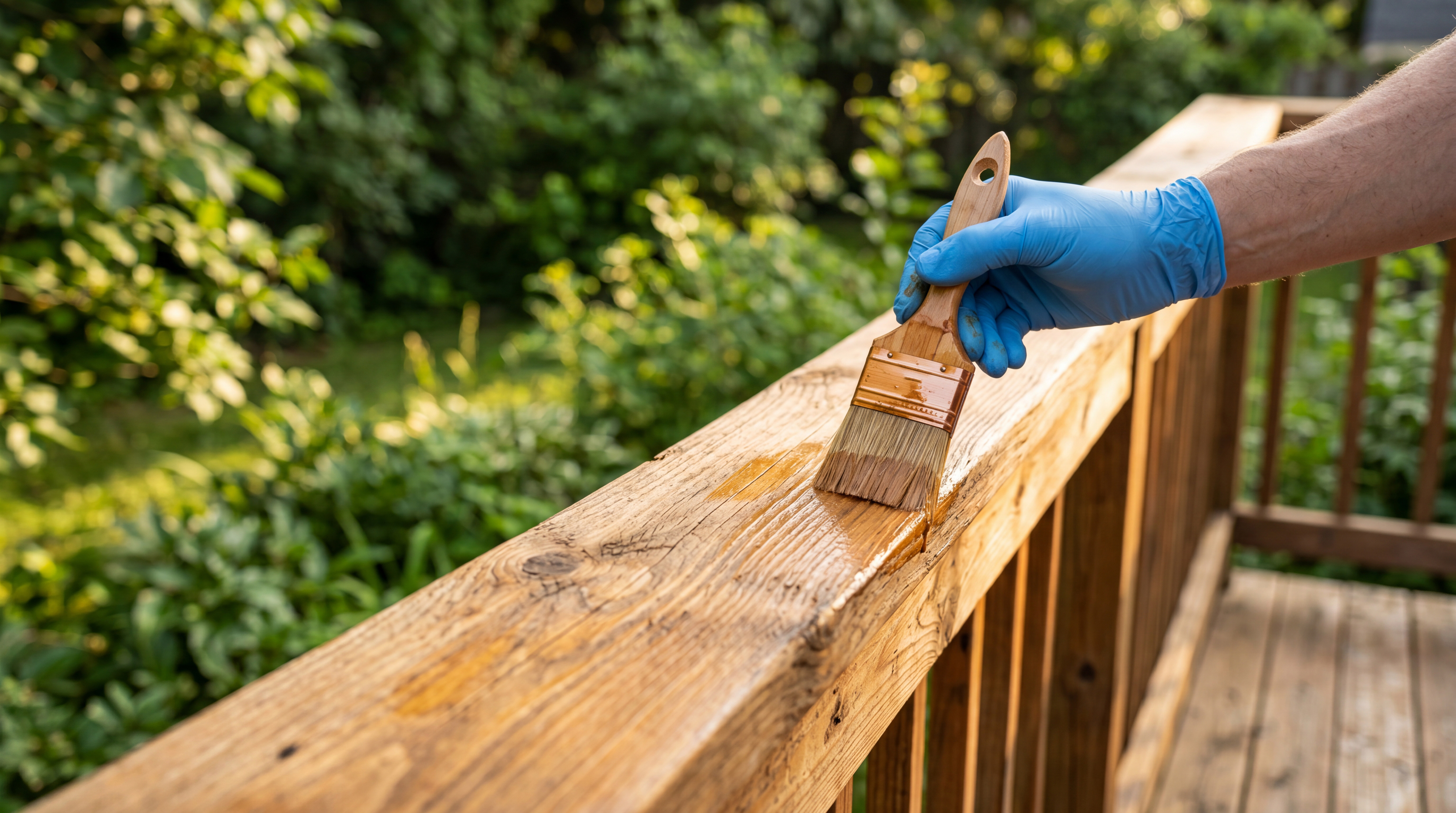
Deck stain does not last forever. Over time, sun, rain, humidity, and foot traffic wear it down. But stain rarely fails all at once. It fades a little here, peels a little there, and slowly stops protecting the wood underneath. By the time many homeowners notice, the deck may already be graying, splintering, or absorbing moisture.
Knowing how to tell if your deck stain is failing helps you act before damage sets in. Here are the warning signs to watch for, what each one means, what causes stain to fail early, and what to do about it.
Why It Matters to Catch Failing Stain Early
Deck stain protects your wood from UV rays and moisture. When that protection breaks down, the wood is exposed to:
- Sun damage that causes graying, drying, and cracking
- Moisture that leads to swelling, warping, mildew, and rot
- Wear that creates rough, splintery surfaces
Catching failing stain early often means a simpler fix, like cleaning and a maintenance coat. Waiting too long can mean a more involved restoration or even board replacement.
12 Signs Your Deck Stain Is Failing
1. Water Soaks Into the Wood
This is one of the most reliable signs. A healthy finish causes water to bead on the surface. When the stain is failing, water soaks into the boards and darkens the wood.
Try the water test: Sprinkle a little water on several boards in sunny, shaded, and high-traffic areas. If it soaks in within a few minutes, the stain is no longer protecting the wood well.
2. Fading Color
If your deck looks noticeably lighter or washed out compared to when it was stained, UV rays have broken down the pigment. Fading usually shows up first on the sunniest parts of the deck.
3. Graying Wood
Gray patches mean the wood itself is being affected by sun exposure. Graying often appears after the stain has worn thin, leaving the wood unprotected.
4. Peeling or Flaking
Peeling and flaking mean the stain has lost its bond with the wood. Instead of soaking in and wearing gradually, the finish is lifting off the surface in patches.
5. Uneven or Blotchy Wear
If some areas of the deck look freshly stained while others look worn, the stain is wearing unevenly. This often happens in areas with more sun or foot traffic.
6. Worn Traffic Paths
Paths between doors, stairs, and seating areas often wear down faster than the rest of the deck. If you can see a clear trail where the stain has worn away, the finish is failing in those spots.
7. Rough or Splintery Boards
When stain wears away, the surface fibers of the wood become exposed and can break down. If the deck feels rough or you are getting splinters, the protective layer is no longer doing its job.
8. Cracking or Checking
Small cracks along the grain often appear when wood dries out after losing its protective finish. These cracks can let in more moisture over time.
9. Mildew, Algae, or Dark Spots
Dark spots, green film, or black patches often mean moisture is lingering on or in the wood. This is common in shaded areas and can be a sign that the finish is no longer repelling water.
10. Sticky or Tacky Surfaces
If parts of your deck feel sticky long after staining, too much stain may have been applied and never fully absorbed. This is a sign of an application problem.
11. Bubbling or Blistering
Bubbles or blisters in the finish may indicate that moisture was trapped under the stain or that it was applied in unsuitable conditions.
12. Worn Railings and Stair Treads
Railing tops catch direct sun and rain, and stair treads see heavy use. These areas often show stain failure before the rest of the deck.
What Causes Deck Stain to Fail?
Normal Aging and UV Exposure
Even a properly applied stain wears down over time, especially in strong East Texas sun. Many decks need a fresh coat every two to three years, though this varies.
Poor Surface Preparation
Stain applied over dirt, mildew, or an old failing finish may not bond properly. This is one of the most common causes of early peeling.
Staining Damp Wood
Wood that is still wet from rain, cleaning, or humidity cannot absorb stain well. This can lead to peeling, blotchiness, and trapped moisture.
Applying Too Much Stain
Heavy coats can sit on the surface instead of soaking in, leading to sticky spots and peeling.
Staining in the Wrong Weather
Very hot temperatures and direct sun can make stain dry too quickly. Rain shortly after application can damage a fresh finish.
Incompatible Products
Applying one type of stain over another without checking compatibility can cause adhesion problems.
Heavy Foot Traffic
High-traffic areas simply wear faster than the rest of the deck.
Shade and Moisture
Shaded decks stay damp longer, which can lead to mildew and moisture-related finish problems.
How to Inspect Your Deck Stain
Walk your deck and check these areas:
- Sunny sections, especially on the south and west sides
- Shaded sections under trees or overhangs
- High-traffic paths between doors and stairs
- Stair treads and landings
- Railing tops and balusters
- Areas under planters and rugs
- Around the grill, where grease and heat can affect the finish
Look for fading, graying, peeling, roughness, mildew, and water absorption. Take notes or photos so you can track changes over time.
What to Do When Your Deck Stain Is Failing
The right solution depends on how far the failure has gone.
Light Wear: Clean and Apply a Maintenance Coat
If the stain is fading but not peeling, and the wood is still in good shape, a thorough cleaning followed by a fresh coat may be enough. Make sure the new stain is compatible with the existing finish.
Moderate Wear: Deeper Cleaning and Spot Prep
If some areas are worn down to bare wood while others still have stain, more preparation may be needed to even out the surface before restaining.
Peeling or Flaking: Remove the Failing Finish
When stain is peeling or flaking, the old finish needs to be removed before applying new stain. Staining over a peeling finish usually leads to more peeling.
Heavy Damage: Full Deck Restoration
If your deck is heavily weathered, gray, splintery, and covered in failing stain, a full restoration may be the best solution. Restoration includes inspection, repairs, cleaning, finish removal, smoothing, and new stain and sealer.
Structural Problems: Repair or Replace
If you find soft wood, rot in the framing, leaning posts, or sagging sections, those problems need to be addressed before any staining. In some cases, deck replacement may be the safer choice.
How to Help Your Next Stain Last Longer
- Prepare the surface properly by cleaning and removing failing finish.
- Make sure the wood is dry before staining.
- Stain in mild, dry weather and avoid direct afternoon sun.
- Apply the right amount and avoid heavy buildup.
- Choose the right stain for your deck’s condition and sun exposure.
- Keep the deck clean by sweeping and removing debris regularly.
- Add shade with a patio cover or pergola to reduce sun and rain exposure.
- Check the deck regularly and touch up worn areas before they get worse.
When to Call a Professional
Consider professional help if:
- Your stain is peeling or flaking across large areas
- You are unsure how to remove the old finish
- Your deck is heavily weathered or gray
- You have had repeated stain failures
- You notice signs of rot or structural damage
A professional can diagnose why the stain failed and recommend the right fix.
Professional Deck Staining From Rise Decks & Fence
At Rise Decks & Fence, our staining and sealing services include deck staining, wood sealing, deck restoration, and outdoor wood finishing. We inspect your deck, identify why the stain is failing, and prepare the surface properly before applying a new finish that helps protect against East Texas sun and moisture.
If your deck needs more than a new finish, we can help with repairs, restoration, or a new custom deck. We also stain fences, pergolas, and patio covers.
We serve homeowners in Tyler, Lindale, Flint, Mabank, Gun Barrel City, and surrounding East Texas communities. Visit our FAQ page for more answers.
Failing Deck Stain FAQs
How do I know if my deck stain is failing?
Common signs include water soaking into the wood, fading, graying, peeling, rough boards, and mildew.
Why is my deck stain peeling?
Peeling is often caused by poor surface preparation, staining damp wood, applying too much stain, or staining over an old failing finish.
Can I stain over failing stain?
If the old stain is peeling or flaking, it should be removed first. If it has only faded evenly, cleaning and a maintenance coat may be enough.
How often should I restain my deck?
Many decks need a fresh coat every two to three years, though decks in full sun or heavy shade may need it sooner.
What is the water test for deck stain?
Sprinkle water on your deck. If it beads up, the stain is still working. If it soaks in, it is time to restain.


