




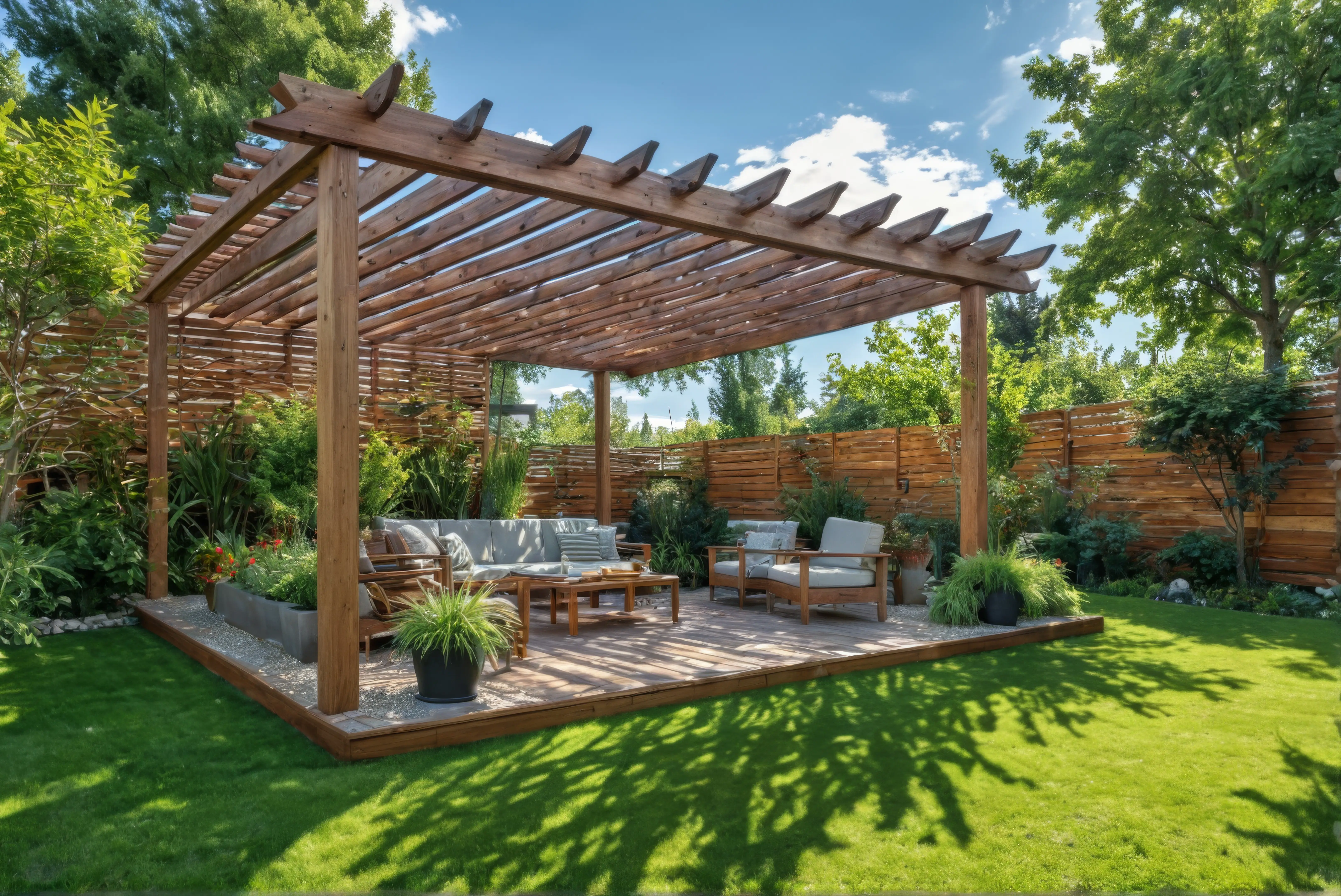
A pergola or patio cover adds shade, style, and comfort to your outdoor living space. But like any outdoor wood structure, it faces constant exposure to East Texas sun, humidity, and rain. Over time, unprotected wood can fade, gray, crack, grow mildew, and eventually rot.
Staining and sealing is one of the best ways to protect your pergola or patio cover and keep it looking beautiful for years. Because these structures are overhead and exposed from every angle, they also come with unique challenges. Here is how to stain and seal a pergola or patio cover, what makes these projects different, and how to protect your investment long-term.
Why Pergolas and Patio Covers Need Protection
Exposure From Every Angle
Pergolas are open to the sky, so their top slats and beams take direct sun and rain. Patio covers protect the space underneath, but their posts, beams, and exposed edges still face weather and humidity.
Horizontal Surfaces Catch Water
The tops of beams, rafters, and slats are flat surfaces where water can sit after rain. These areas are often the first to show wear.
End Grain Absorbs Moisture
The cut ends of beams and rafters absorb water faster than the sides of the boards, making them especially vulnerable.
Vines and Plants Trap Moisture
Climbing plants look beautiful on a pergola but can hold moisture against the wood.
Strong Sun on Top Surfaces
The tops of pergola slats get some of the most intense sun exposure in your entire backyard.
What Makes Staining a Pergola or Patio Cover Different?
Working Overhead
Staining overhead means working on ladders and reaching up, which takes more care and effort than staining a deck or fence.
Drips
Stain can drip onto the surfaces below, including decks, patios, furniture, and plants.
Hard-to-Reach Areas
The tops of slats and beams can be difficult to reach, but they are often the areas that need protection most.
Protecting What Is Underneath
You need to protect the deck, patio, furniture, and landscaping below the structure.
When to Stain Your Pergola or Patio Cover
New Structures
New wood may need time to dry before the first coat, depending on the type of wood and how it was treated. Your builder can recommend the right timing.
Existing Structures
Watch for signs your pergola or patio cover needs attention:
- Fading or graying wood
- Water soaking in instead of beading up
- Peeling or flaking finish
- Rough or cracked surfaces
- Mildew or dark spots
Many outdoor wood structures need a fresh coat every two to three years, depending on exposure.
Best Weather
Stain performs best on clean, dry wood in mild weather. In East Texas, mid-to-late spring and early-to-mid fall often offer the best conditions. Avoid extreme heat, direct midday sun, and rainy forecasts.
How to Stain and Seal a Pergola or Patio Cover
Step 1: Protect the Area Below
Before starting, protect everything underneath the structure:
- Move or cover furniture.
- Cover the deck or patio surface with drop cloths.
- Protect nearby plants and landscaping.
- Cover nearby siding, windows, and doors.
Step 2: Inspect the Structure
Check the entire pergola or patio cover for:
- Cracked or damaged boards
- Soft spots or rot
- Loose or rusted hardware
- Weak connections
- Damage from vines or storms
Make repairs before staining.
Step 3: Trim Plants and Vines
Trim vines and plants away from the wood so you can access all surfaces and so the stain can dry properly.
Step 4: Clean the Wood
Clean the wood to remove dirt, pollen, mildew, and old, failing finish. Use a cleaner designed for wood and a soft brush. Be careful with pressure washing, especially overhead, since high pressure can damage the wood and spray water into unwanted areas.
Step 5: Let the Wood Dry
Wood must be completely dry before staining. This may take longer in humid weather.
Step 6: Choose Your Stain
Consider:
- Matching your deck or fence for a cohesive look
- More pigment for better UV protection on top surfaces
- Water-repellent properties to protect against moisture
- The look you want, from natural to solid color
Step 7: Test the Color
Test the stain on a small, less visible area to see how it looks on your wood.
Step 8: Work From the Top Down
Start at the top of the structure and work your way down:
- Top slats or rafters, including the tops and ends
- Beams
- Posts
Working from the top down lets you catch drips as you go.
Step 9: Pay Attention to Problem Areas
Make sure to cover:
- The tops of slats and beams
- Cut ends and end grain
- Joints and connections
- The bases of posts
Step 10: Allow Proper Drying Time
Follow the product’s instructions for dry and cure times before removing coverings and returning furniture.
Special Considerations for Patio Covers
Patio covers have a solid roof, so the underside of the structure gets less direct rain. However, the posts, beams, and exposed edges still face humidity and wind-driven rain. If your patio cover has a wood ceiling, it may also benefit from a protective finish. Your contractor can help determine which parts need staining and sealing.
Ladder Safety Tips
Working overhead requires care:
- Use a sturdy ladder on stable, level ground.
- Have someone help steady the ladder.
- Do not overreach. Move the ladder instead.
- Avoid working in windy conditions.
- Wear appropriate protective gear.
If you are not comfortable working at heights, professional help is the safer choice.
Caring for Your Pergola or Patio Cover After Staining
- Trim vines regularly so they do not trap moisture.
- Clear leaves and debris from the top of the pergola and the roof of the patio cover.
- Keep gutters clear on patio covers.
- Inspect the structure once or twice a year.
- Check after storms for damage.
- Restain as needed to maintain protection.
Common Mistakes When Staining a Pergola or Patio Cover
- Skipping the tops of slats and beams
- Ignoring end grain
- Not protecting the deck or patio below
- Staining damp wood
- Working in direct midday sun
- Using unsafe ladder practices
- Letting vines overgrow the structure
Why Many Homeowners Choose Professional Staining
Staining a pergola or patio cover involves overhead work, hard-to-reach areas, and careful protection of surfaces below. Professionals have the experience and equipment to do the job safely and thoroughly, helping ensure every surface is protected.
Professional Pergola and Patio Cover Staining From Rise Decks & Fence
At Rise Decks & Fence, our staining and sealing services protect pergolas, patio covers, decks, and fences from East Texas sun and moisture. We take care with preparation, protect the areas below, and make sure every surface gets the coverage it needs. We also build custom patio covers and pergolas and custom decks.
We serve homeowners in Tyler, Lindale, Bullard, Flint, Canton, and surrounding East Texas communities. Learn more about us on our About page or visit our FAQ page.
Pergola and Patio Cover Staining FAQs
How often should I stain my pergola?
Many pergolas need a fresh coat every two to three years, depending on sun exposure and weather.
Should my pergola match my deck?
Matching stain colors creates a cohesive look, though complementary colors can also work well.
Do patio covers need staining?
Wood components like posts, beams, and exposed edges benefit from staining and sealing, even under a solid roof.
What part of a pergola wears out first?
The tops of slats and beams and the end grain often show wear first because they face the most sun and moisture.
Can I stain a pergola with vines on it?
Trim the vines back first so you can reach all surfaces and allow the stain to dry properly.


