




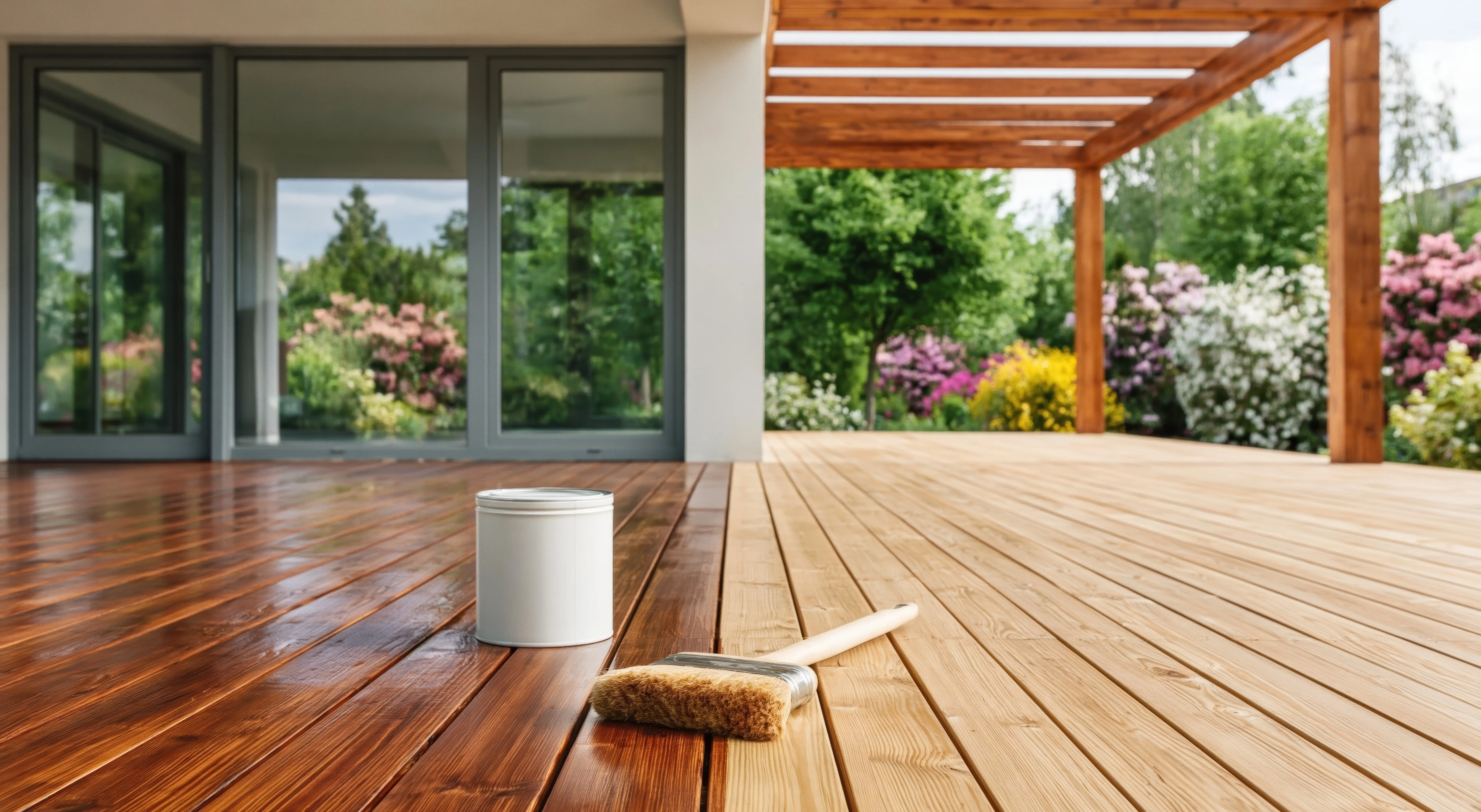
Walk down the stain aisle at any home improvement store and you will find dozens of options. Clear, tinted, semi-transparent, solid, oil-based, water-based, and every color imaginable. Choosing the right one can feel overwhelming. And in East Texas, the wrong choice can mean a deck that fades, peels, or grows mildew far sooner than it should.
The right deck stain for East Texas weather is one that matches your deck’s conditions: how much sun it gets, how much moisture it faces, the age and condition of the wood, and the look you want. Here is how to choose a deck stain that protects your wood and holds up to our sun, humidity, and rain.
Why East Texas Weather Changes the Equation
A stain that performs well in a dry, mild climate may struggle here. East Texas decks face:
- Intense sun that breaks down wood fibers and fades color
- High humidity that keeps wood damp and encourages mildew
- Heavy rain and storms that soak boards repeatedly
- Pollen and debris from pine trees and hardwoods
- Temperature swings that cause wood to expand and contract
Your stain needs to stand up to all of these at once. That is why choosing based on your deck’s real conditions matters more than picking the first can on the shelf.
Step 1: Assess Your Deck’s Sun Exposure
Start by noticing how much sun your deck gets.
Full Sun
Decks facing south or west often get intense sun for much of the day. These decks fade faster and benefit from stains with more pigment, since pigment helps block UV rays.
Partial Sun
Decks that get a mix of sun and shade may do well with a semi-transparent stain that balances color, natural look, and UV protection.
Heavy Shade
Decks under trees or overhangs stay damp longer. UV protection matters less here, but moisture and mildew resistance matter more.
Many decks have all three conditions in different areas. Choose a stain that handles your deck’s toughest exposure.
Step 2: Consider Moisture and Mildew
In East Texas humidity, mildew is a constant concern, especially on shaded decks. When choosing a stain:
- Look for products with water-repellent properties.
- Check whether the stain is labeled as resistant to mildew.
- Plan for proper cleaning and prep, since no stain can fully overcome mildew that was left on the wood.
Remember that good airflow, regular cleaning, and keeping debris off the deck help any stain resist mildew longer.
Step 3: Choose Your Opacity
Opacity determines how much color the stain adds and how much of the wood grain shows. It also affects UV protection.
Clear and Toner Finishes
These let nearly all of the wood grain show. They offer the least UV protection and typically need more frequent reapplication. They can work well on shaded decks or for homeowners who prefer a very natural look.
Semi-Transparent Stains
These add noticeable color while still showing the grain. They offer a good balance of appearance and UV protection and tend to wear gradually rather than peel.
Solid Stains
These provide the most color and coverage, hiding most of the grain and many imperfections. They generally offer the strongest UV protection, which can be helpful on full-sun decks. They can peel in high-traffic areas if not applied correctly.
A good rule of thumb: The more sun your deck gets, the more pigment you may want. The more you want to see the natural grain, the lighter the opacity you may prefer.
Step 4: Consider the Age and Condition of Your Wood
New Decks
New wood often looks beautiful with a semi-transparent stain that shows off the grain. New decks may need time to dry before the first coat.
Older Decks in Good Shape
If your deck has some wear but is still in good condition, a semi-transparent stain can refresh the color while keeping a natural look.
Weathered or Mismatched Decks
If your deck has graying, discoloration, or mismatched boards from repairs, a more pigmented stain can help even out the appearance.
Decks With Existing Finishes
Check what type of stain is already on your deck. Some products may not be compatible with the existing finish. It is usually easier to move from a lighter stain to a more solid stain than the other way around.
Step 5: Understand Oil-Based vs. Water-Based Stains
Deck stains are often described as oil-based or water-based. Each has general characteristics:
Oil-based stains typically penetrate into the wood and can bring out a rich, warm tone. They may take longer to dry.
Water-based stains typically dry faster, clean up easily, and may hold their color well. Formulas have improved significantly over the years.
Performance varies by product, so read the label carefully and consider your deck’s condition and existing finish. Your contractor can help you choose a product that fits your deck.
Step 6: Choose a Color That Works in the Heat
Color affects more than looks. In East Texas sun:
- Darker colors absorb more heat and can make the deck surface feel hotter underfoot.
- Lighter colors may stay cooler but can show dirt more easily.
- Mid-tone colors often offer a nice balance.
Also consider how the color complements your home’s exterior, trim, and roof, as well as your fence, pergola, or patio cover.
Step 7: Think About Foot Traffic and Maintenance
How you use your deck matters:
- Heavy-use decks with lots of foot traffic may show wear faster, especially on stairs and paths.
- Low-maintenance preferences may lead you toward stains that last longer between coats.
- Natural look preferences may mean more frequent reapplication.
Be honest about how much maintenance you are willing to do. Many decks need a fresh coat every two to three years, though this depends on the product, exposure, and traffic.
Step 8: Read the Label
Before you buy, check the product label for:
- UV protection
- Water repellency
- Mildew resistance
- Recommended application temperatures
- Dry and cure times
- Compatibility with existing finishes
- Coverage and number of coats
Following the label instructions is one of the best ways to help the stain perform as intended.
Step 9: Test Before You Commit
Stain colors can look very different on your actual wood than on a sample card or online photo. Test the stain on a small, less visible area of your deck. Let it dry fully, then look at it in different lighting before deciding.
Step 10: Coordinate Your Outdoor Wood
If you have a fence, pergola, or patio cover, think about how your deck stain will look alongside them. Using the same or complementary stain colors creates a cohesive outdoor space. Our staining and sealing services cover decks, fences, pergolas, and patio covers.
Common Mistakes When Choosing a Deck Stain
- Choosing based on color alone without considering sun and moisture
- Using a clear finish on a full-sun deck and expecting long-lasting UV protection
- Ignoring the existing finish and choosing an incompatible product
- Choosing a very dark color for a deck that gets intense afternoon sun
- Skipping the test patch
- Not reading the label for application conditions
The Best Stain Still Needs Good Prep
Even the best stain will fail if it is applied to a dirty, damp, or poorly prepared surface. Proper inspection, repairs, cleaning, drying, and timing are just as important as the product you choose.
Professional Help Choosing the Right Stain
At Rise Decks & Fence, we help East Texas homeowners choose deck stains based on their deck’s sun exposure, moisture levels, wood condition, and style preferences. Then we prepare the surface properly and apply the stain with attention to detail so it protects your deck from UV exposure and moisture.
If your deck needs more than a new finish, we can also help with repairs, restoration, or a new custom deck. To reduce sun exposure on part of your deck, consider adding a patio cover or pergola.
We serve homeowners in Tyler, Lindale, Bullard, Palestine, Murchison, and surrounding East Texas communities. Visit our FAQ page for more answers.
Choosing Deck Stain FAQs
What is the best type of deck stain for East Texas?
It depends on your deck. Full-sun decks often benefit from more pigmented stains for UV protection, while shaded decks need good moisture and mildew resistance.
Is solid stain better for hot climates?
Solid stains generally offer strong UV protection, which can help on full-sun decks, but they may peel in high-traffic areas if not applied properly.
Does dark deck stain make the deck hotter?
Darker colors absorb more heat and can make the deck surface feel hotter in direct sun.
Can I switch stain types?
It is usually easier to go from a lighter stain to a more solid stain. Check compatibility with your existing finish before switching.
How do I know which stain color to choose?
Consider your home’s exterior, your other outdoor wood, and how much sun the deck gets. Always test the color on a small area first.


