




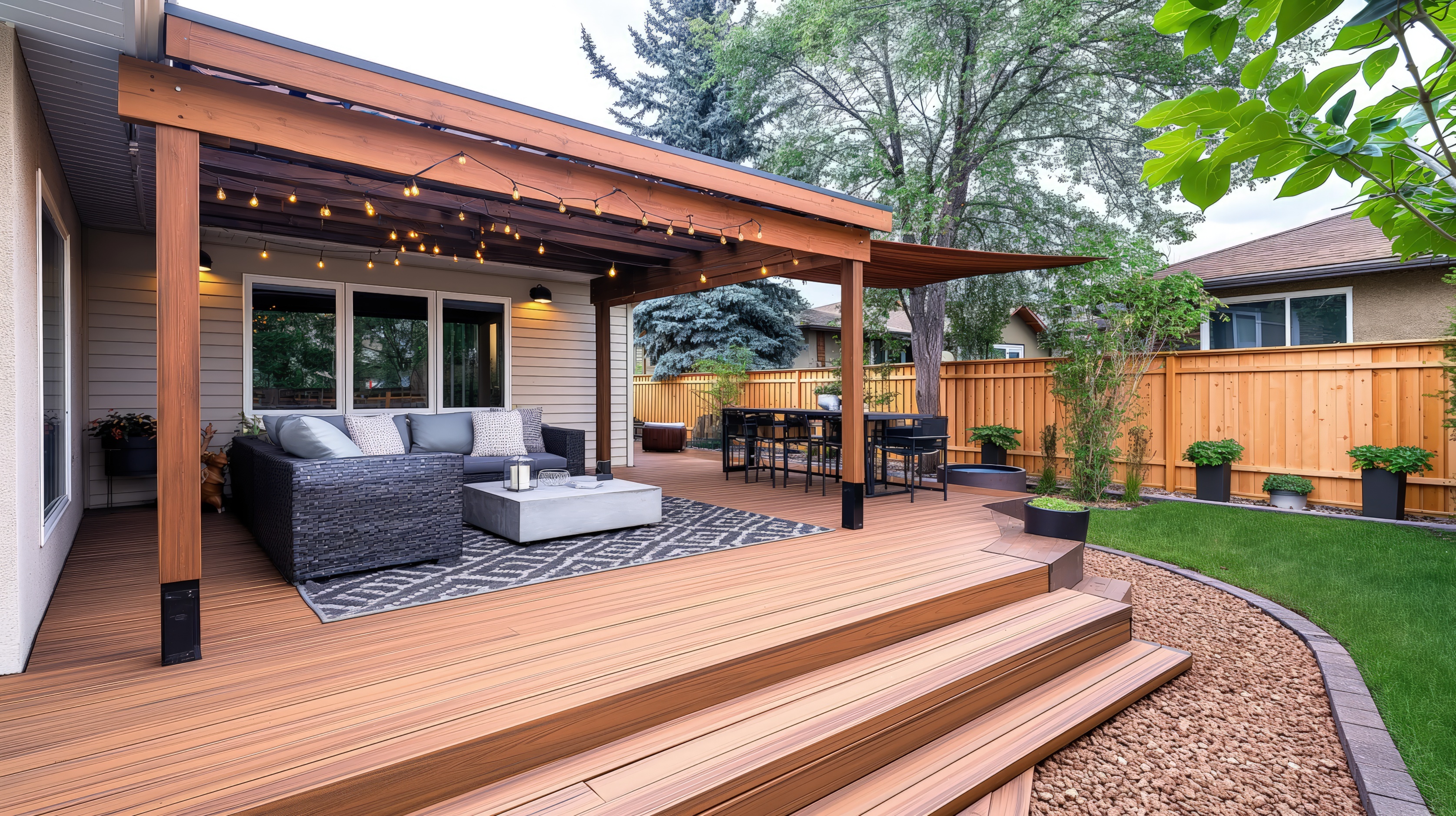
One of the most common regrets homeowners have about their deck is the size. Some build a deck that turns out too small, with barely enough room for a table and chairs. Others go so big that the deck overwhelms the yard and costs more than it needs to. Getting the size right is one of the most important parts of planning a deck.
So how big should your deck be? The answer depends on how you will use it, the furniture you want, the size of your home and yard, and your budget. Here is how to choose the right deck size for your home and yard.
Why Deck Size Matters
The size of your deck affects:
- How comfortable the space feels
- How much furniture you can fit
- How easily people can move around
- How the deck looks next to your home
- How much yard space you have left
- The overall cost of the project
A deck that is sized correctly feels natural and inviting. A deck that is too small feels cramped, while a deck that is too large can feel empty or out of proportion.
Step 1: Decide How You Will Use Your Deck
Start by listing the activities you want your deck to support:
- Relaxing: A couple of chairs and a small table
- Dining: A dining table and chairs
- Grilling: A grill with safe clearance and prep space
- Entertaining: Room for groups of people to gather
- Lounging: Sofas, lounge chairs, or sectionals
- Kids and pets: Space to play safely
- Hot tub: Room for a hot tub and walking space around it
The more activities you want, the more space you will need.
Step 2: Measure Your Furniture
Measure the furniture you plan to use on the deck, or the furniture you plan to buy. This includes:
- Dining tables and chairs
- Outdoor sofas and sectionals
- Lounge chairs
- Side and coffee tables
- Grills and outdoor kitchen equipment
- Planters and storage benches
Knowing your furniture sizes helps you plan a deck that fits everything comfortably.
Step 3: Plan for Movement and Clearance
Furniture is only part of the equation. People need room to walk around, pull out chairs, and move between areas. When planning your deck size, leave space for:
- Pulling out dining chairs comfortably without hitting railings or other furniture
- Walkways between the house door, seating areas, and stairs
- Grill clearance based on the manufacturer’s recommendations
- Door swings for doors that open onto the deck
- Stairs landings so people can step on and off comfortably
A deck that only fits the furniture but leaves no room to move will feel cramped.
Step 4: Create Zones
If you want your deck to do more than one thing, plan separate zones:
- Dining zone near the kitchen door
- Lounge zone with comfortable seating
- Cooking zone for the grill and prep area
- Play zone for kids
- Quiet zone for reading or relaxing
Each zone needs its own space. Adding up the space needed for each zone gives you a better idea of your total deck size.
Step 5: Consider Your Home’s Size and Style
Your deck should feel proportional to your home. A small deck on a large house can look like an afterthought, while a huge deck on a small home can overwhelm it. Consider:
- The width of the back of your home
- The height of the house
- The location of doors and windows
- Your home’s architectural style
A deck that complements the scale of your home looks intentional and balanced.
Step 6: Consider Your Yard Size
Think about how much yard space you want to keep. A deck that takes up most of a small yard may leave little room for grass, gardens, or play. In a large yard, a small deck may look lost. Balance deck space with open yard space based on how your family uses the backyard.
Step 7: Think About Sun and Shade
In East Texas, sun exposure affects how usable your deck will be. A large deck in full sun may get uncomfortably hot in summer. Adding a patio cover or pergola over part of the deck can make a big difference. When planning a covered area, make sure it is large enough to shade the furniture you plan to use underneath.
Step 8: Plan for the Future
Think about how your needs may change. Are you planning to host more gatherings? Is your family growing? Do you want to add a hot tub or outdoor kitchen later? Planning for future needs can save you from expanding the deck down the road.
Step 9: Consider Your Budget
Deck size has a big impact on cost. Larger decks require more materials and labor. If your budget is limited, focus on the size you need most and leave room to expand later. A well-designed smaller deck often serves families better than a larger, poorly planned one.
Step 10: Check Local Rules
Your city or HOA may have rules about setbacks, deck size, or how close a deck can be to property lines. Check these requirements before finalizing your plans.
Test Your Deck Size Before Building
Before committing to a size, try marking out the deck on the ground:
- Use stakes, string, or marking paint to outline the deck.
- Place your furniture inside the outline.
- Walk around the space and pull out chairs.
- Check how the deck relates to doors, windows, and the yard.
- Look at it from inside the house.
This simple test helps you see whether the size feels right.
Signs Your Deck Plan Is Too Small
- There is not enough room for all your furniture.
- Chairs hit railings or edges when pulled out.
- Walkways are blocked.
- The grill is too close to seating or doors.
- Guests would have to stand in the yard.
Signs Your Deck Plan Is Too Large
- The deck overwhelms the size of your home.
- There is little yard space left.
- You do not have enough furniture to fill it.
- The cost is higher than the value you will get from the extra space.
Choosing a Deck Shape
Size and shape go together. Consider:
- Rectangular decks for efficient use of space and simpler construction
- L-shaped decks that wrap around a corner of the house
- Angled decks that add visual interest
- Multi-level decks that create separate zones without one huge platform
- Wraparound decks that connect multiple areas of the home
The right shape can make a deck feel larger or more functional without adding square footage.
Common Deck Sizing Mistakes
- Building without measuring furniture.
- Forgetting about walkways and clearance.
- Ignoring the scale of the home.
- Not planning for shade.
- Building only for today’s needs.
- Making the deck larger than necessary.
Protecting Your Deck
Whatever size you choose, your deck will face East Texas sun, rain, and humidity. Regular staining and sealing helps protect the wood from UV exposure and moisture so your deck looks great and lasts for years.
Plan the Right Size Deck With Rise Decks & Fence
At Rise Decks & Fence, we build custom decks designed around your vision, not a template. We take time to understand how you want to use your deck, measure your space, and help you choose a size and layout that fits your home, your yard, and your budget. You stay involved throughout the process, with clear communication from start to finish.
We serve homeowners in Tyler, Lindale, Bullard, Chandler, Mabank, and surrounding East Texas communities. Learn more about us on our About page or visit our FAQ page.
Deck Size FAQs
How big should my deck be?
It depends on how you will use it, the furniture you want, and the size of your home and yard. Planning for furniture, walkways, and zones helps you find the right size.
Is a bigger deck always better?
Not always. A deck that is too large can overwhelm your home and yard and cost more than needed.
How much space do I need for a dining table on a deck?
You need enough room for the table, chairs pulled out comfortably, and space for people to walk around.
Can I expand my deck later?
In many cases, yes. If your deck is structurally sound, an expansion can add more space later.
Should I add a patio cover to my deck?
A patio cover over part of your deck adds shade and rain protection, making the deck more comfortable in East Texas weather.


