




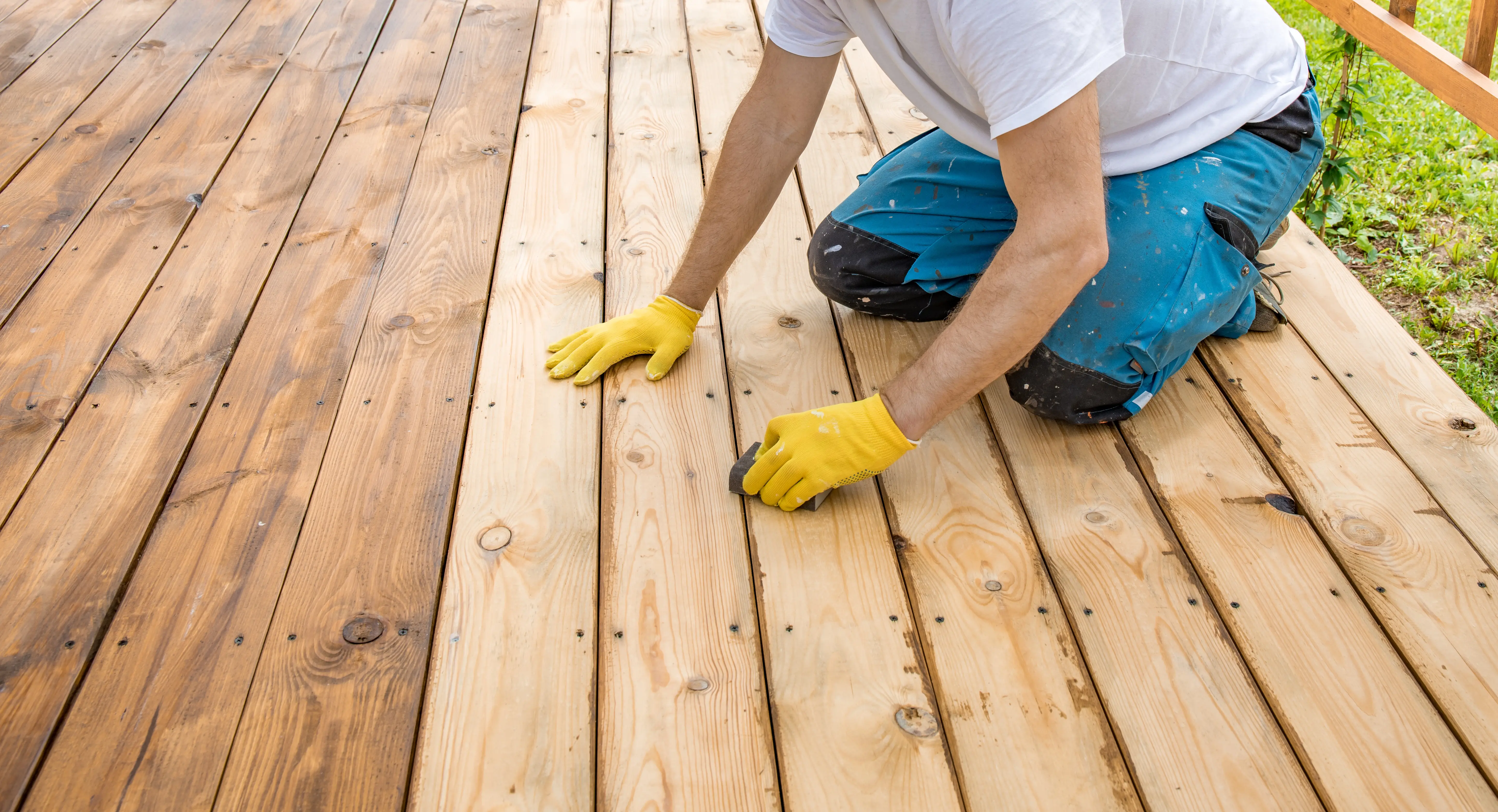
Your new deck is finally built. The boards are fresh, the railings are solid, and you are ready to protect your investment with a beautiful stain. But should you stain it right away? For many new decks, the answer is no. Staining too soon can lead to poor absorption, blotchy color, and a finish that peels or fails early. Waiting too long, on the other hand, leaves the wood exposed to sun and moisture.
So how long should you wait before staining a new deck? The answer depends on the type of wood, how it was treated, and the weather. Here is what East Texas homeowners need to know about timing that first coat of stain, how to tell when your deck is ready, and how to protect it in the meantime.
Why New Decks Often Need Time Before Staining
New lumber often contains moisture. Some wood, especially pressure-treated lumber, can be quite wet when it is installed because of the treatment process. Stain needs to soak into the wood to protect it, and wood that is still full of moisture cannot absorb stain properly.
When stain is applied to wood that is too wet:
- The stain may sit on the surface instead of soaking in.
- The color may look blotchy or uneven.
- The finish may peel or flake early.
- Moisture can become trapped under the finish.
- Mildew can develop beneath the stain.
Giving the wood time to dry helps the stain penetrate, bond, and protect the deck the way it should.
How Long Should You Wait?
There is no single waiting period that applies to every deck. The right timing depends on several factors.
The Type of Wood
Different woods dry and absorb stain differently. Some types of wood may be ready to finish sooner, while others, especially wood that was very wet when installed, may need more time.
How the Wood Was Treated
Pressure-treated lumber is often installed while still holding moisture from the treatment process. It commonly needs time to dry before it is ready for stain. Some lumber is dried again after treatment before it is sold, which may allow it to be stained sooner. The lumber manufacturer’s guidance and your builder’s recommendation are good starting points.
The Weather
In East Texas, humidity plays a big role. Wood dries faster in warm, dry, breezy conditions and slower in humid or rainy weather. A deck built during a wet spring may need longer to dry than one built during a dry stretch.
Sun and Shade
Deck boards in full sun usually dry faster than boards under heavy shade. On a partially shaded deck, some areas may be ready before others.
Time of Year
A deck built in late spring or summer may dry faster than one built in winter, when cooler temperatures and damp conditions slow drying.
Because of all these variables, many new decks need anywhere from a few weeks to a few months before the first coat of stain. The best way to know for sure is to test the wood.
How to Tell If Your New Deck Is Ready for Stain
The Water Test
The water test is one of the easiest ways to check whether your deck is ready:
- Sprinkle a small amount of water on several boards in different areas of the deck.
- Watch what happens over the next few minutes.
- If the water beads up and sits on the surface, the wood is likely still too wet or not ready to absorb stain.
- If the water soaks in and darkens the wood within a few minutes, the wood is likely ready for stain.
Test boards in both sunny and shaded areas, since they may dry at different rates.
Other Signs the Wood Is Drying
- The wood looks lighter in color than when it was installed.
- The boards feel dry to the touch rather than cool or damp.
- The surface no longer looks wet or heavy.
When in doubt, ask your builder. They can recommend the right timing based on the wood used and the conditions during construction.
What Happens If You Stain Too Soon?
Staining a new deck before it is ready can cause problems that are frustrating to fix:
- Poor absorption: The stain cannot soak into wet wood.
- Blotchy color: Some areas absorb more stain than others.
- Peeling and flaking: The finish may not bond properly.
- Sticky surfaces: Stain that cannot absorb may stay tacky.
- Trapped moisture: Moisture under the finish can lead to mildew.
In some cases, a failed first coat may need to be removed before the deck can be properly restained.
What Happens If You Wait Too Long?
Waiting too long is also a problem. Unprotected wood is exposed to East Texas sun and moisture, which can lead to:
- Graying from UV exposure
- Surface cracks and checking as the wood dries out
- Splintering on high-traffic areas
- Mildew and algae in shaded spots
- Moisture absorption that can lead to warping
If your deck sits unprotected for too long, it may need more preparation, such as cleaning or light restoration, before staining. The goal is to stain once the wood is ready, without leaving it exposed longer than necessary.
What to Do While You Wait
You can still protect and enjoy your new deck while waiting to stain it:
- Keep it clean. Sweep away leaves, dirt, and pine straw regularly.
- Avoid trapping moisture. Do not leave rugs, planters, or mats in one spot for long periods.
- Clean up spills quickly. Food, grease, and drinks can stain unprotected wood.
- Watch for mildew in shaded areas.
- Check the boards periodically with the water test.
- Plan your stain color and type so you are ready when the time comes.
Preparing Your New Deck for the First Coat
Even a new deck needs a little preparation before staining:
- Sweep the deck to remove dirt and debris.
- Clean the surface to remove dirt, construction residue, and any mildew.
- Let the wood dry completely after cleaning.
- Do the water test to confirm the wood is ready.
- Check the forecast for a stretch of dry, mild weather.
- Test your stain on a small, less visible area.
Some new boards have a smooth surface that may make it harder for stain to absorb at first. A proper cleaning before the first coat can help the stain penetrate more evenly.
Choosing Your First Stain
The first coat of stain sets the tone for your deck’s long-term maintenance. Consider:
- Semi-transparent stain if you want to show off the natural grain of new wood
- Solid stain if you want more color coverage and UV protection
- How much sun your deck gets, since full-sun decks benefit from more UV protection
- Your home’s exterior colors for a coordinated look
Remember that it is usually easier to move from a semi-transparent stain to a solid stain later than the other way around.
The Best Time of Year to Stain a New Deck in East Texas
Stain performs best on clean, dry wood in mild weather. In East Texas, mid-to-late spring and early-to-mid fall often offer the most dependable conditions. Very hot summer afternoons can cause stain to dry too quickly, and rainy or humid stretches can keep wood from drying fully. If your new deck becomes ready during a challenging season, plan your staining for the next good weather window.
After the First Coat: Keeping Your Deck Protected
Once your new deck has its first coat of stain, regular maintenance keeps it looking great:
- Sweep and clean regularly.
- Watch for signs of wear, such as fading or water soaking in.
- Restain as needed. Many decks need a fresh coat every two to three years, depending on sun exposure and foot traffic.
- Consider adding shade with a patio cover or pergola to reduce sun and rain exposure on part of the deck.
Why Many Homeowners Choose Professional Staining
Timing, prep, and application all affect how well a stain performs. A professional can help determine when your new deck is ready, prepare the surface properly, and apply stain evenly in the right conditions. This helps your first coat look great and last.
New Deck Staining From Rise Decks & Fence
At Rise Decks & Fence, we build custom decks and help homeowners protect them for years to come. After construction, we can recommend the right timing for your first coat of stain based on your wood and East Texas weather. Our staining and sealing services include deck staining, wood sealing, deck restoration, and outdoor wood finishing.
We also stain fences, pergolas, and patio covers so your entire outdoor space can stay protected and look consistent.
We serve homeowners in Tyler, Lindale, Bullard, Chandler, Canton, and surrounding East Texas communities. Visit our FAQ page for more answers.
New Deck Staining FAQs
How long should I wait to stain a new deck?
It depends on the type of wood, how it was treated, and the weather. Many new decks need anywhere from a few weeks to a few months. The water test can help you tell when the wood is ready.
Can I stain a new deck right away?
Some lumber may be ready sooner, but many new decks need time to dry first. Check with your builder or the lumber manufacturer’s guidance.
What happens if I stain my deck too soon?
The stain may not absorb properly, which can lead to blotchy color, peeling, or a sticky surface.
What happens if I wait too long to stain?
Unprotected wood can gray, crack, splinter, and absorb moisture, which may require more prep before staining.
How do I know if my deck is dry enough to stain?
Sprinkle water on the boards. If it soaks in within a few minutes, the wood is likely ready. If it beads up, give it more time.


