




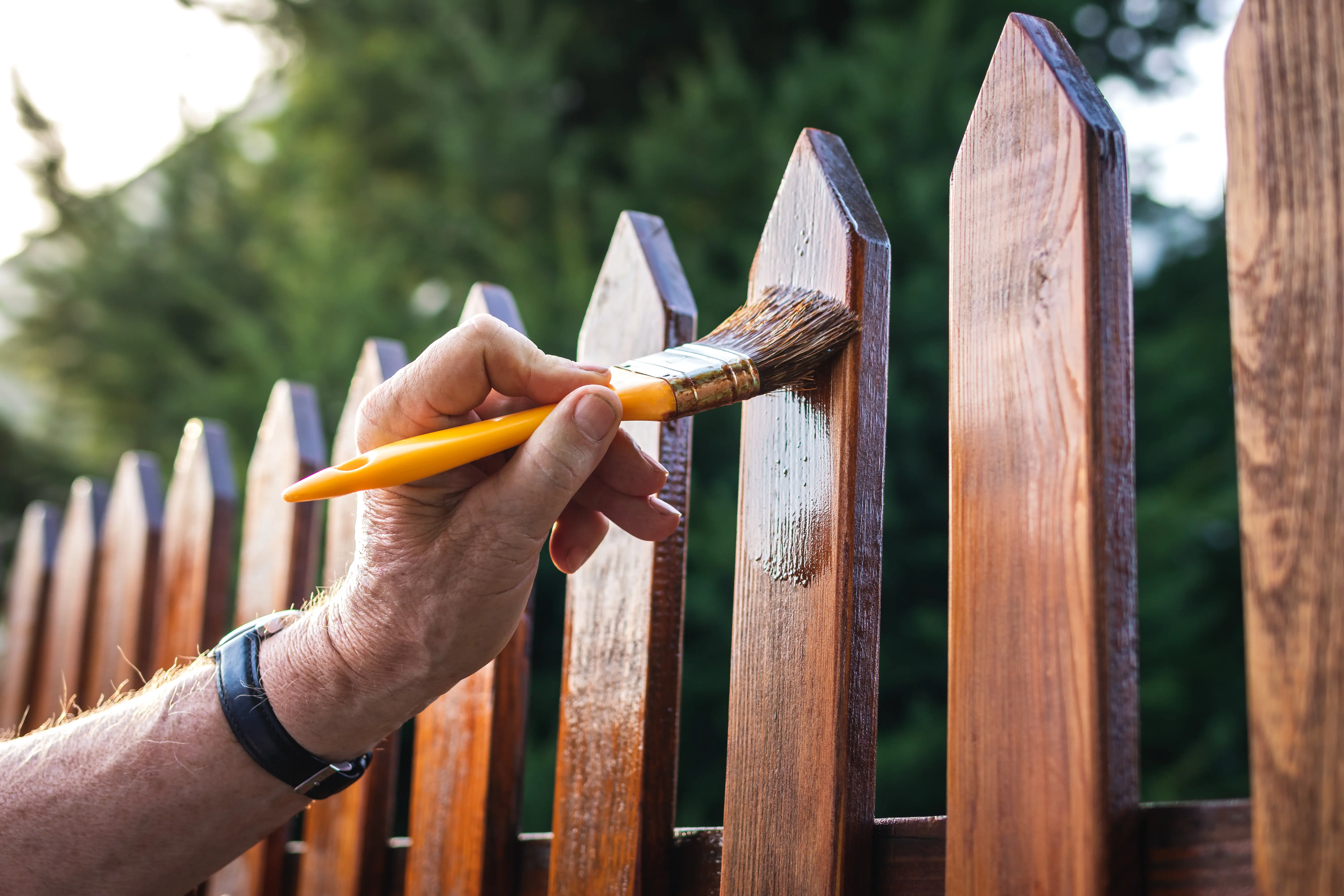
Decks and fences are both made of outdoor wood, and both need stain and sealer to stand up to East Texas sun and humidity. So it is easy to assume staining them is the same job. In reality, fences and decks face different conditions, wear in different ways, and call for different approaches to prep, application, and maintenance.
Understanding these differences helps you choose the right products, plan the right schedule, and get a finish that lasts. Here is how fence staining is different from deck staining and what that means for your outdoor wood.
Why Fences and Decks Need Different Approaches
A deck is a horizontal surface you walk on every day. A fence is a vertical structure that stands up to sun, rain, and wind but rarely gets touched. Those basic differences affect almost every part of the staining process.
Difference 1: Surface Direction
Decks are horizontal. Rain, leaves, and pollen sit on the surface, and water can collect between boards.
Fences are vertical. Water runs down the boards instead of sitting on them, which usually helps the finish last longer.
Difference 2: Foot Traffic
Decks face constant foot traffic, furniture, grills, pets, and spills. High-traffic paths and stairs wear down faster than the rest of the deck.
Fences do not get walked on, so the finish wears mainly from sun and weather.
Difference 3: Sun Exposure Patterns
Decks take sun across their entire horizontal surface.
Fences have two sides that face different directions. One side may get full afternoon sun while the other stays shaded. The sunny side usually fades first.
Difference 4: Two Sides
Decks have one main surface to stain, plus railings and stairs.
Fences have two sides. If one side faces a neighbor’s yard, staining it requires your neighbor’s permission and access.
Difference 5: Ground Contact
Decks are typically raised off the ground, with framing underneath.
Fences have boards and posts close to soil, mulch, and grass. The bottom of a fence often stays damp and needs extra attention.
Difference 6: Landscaping and Sprinklers
Fences are often surrounded by shrubs, vines, and flower beds, and sprinklers may spray them regularly. These keep the wood damp and can shorten the life of the finish.
Decks are affected more by leaves, debris, and rugs or planters sitting on the surface.
Difference 7: Overspray and Protection
Fence staining requires care to protect plants, grass, neighboring property, vehicles, and structures on both sides of the fence.
Deck staining requires protecting siding, doors, windows, and landscaping around the deck.
Difference 8: Application Methods
Application methods often differ. Fences may be stained using sprayers followed by brushing to work stain into the wood, while decks are often stained with brushes, rollers, or pads that work the stain into horizontal boards. The best method depends on the project and the product.
Difference 9: Prep Work
Decks often need more intensive prep, including removing failing finish, smoothing rough areas, and clearing debris from between boards.
Fences usually need cleaning to remove dirt, mildew, and graying, along with clearing plants and debris from the base.
Difference 10: Product Choice
Decks need finishes that hold up to foot traffic and horizontal exposure.
Fences can use a wider range of products since they do not face foot traffic. Many homeowners choose semi-transparent stains for a natural look or more pigmented stains for added UV protection.
Your contractor can help you choose products suited to each structure while coordinating colors.
Difference 11: How Often They Need Restaining
Decks often need restaining sooner because of foot traffic and horizontal exposure. Many need a fresh coat every two to three years, and high-traffic areas may need touch-ups sooner.
Fences often go a little longer between coats, though the sunny side may need attention before the shaded side.
Difference 12: What Drives the Size of the Job
Decks are typically measured by surface area, plus railings and stairs.
Fences are typically measured by length and height, with both sides and gates considered.
What They Have in Common
Despite the differences, decks and fences share some important needs:
- Clean, dry wood before staining
- Mild, dry weather for application
- Regular maintenance to keep the finish working
- Protection from UV rays and moisture
- Careful prep for a long-lasting finish
Coordinating Your Deck and Fence
Staining your deck and fence with matching or complementary colors creates a cohesive backyard. Even if they are stained on different schedules, choosing coordinated colors keeps the look consistent.
Signs Either One Needs Stain
- Water soaks in instead of beading up
- Fading or graying
- Peeling or flaking finish
- Mildew or dark spots
- Rough or splintery surfaces
Common Mistakes
- Using deck products and methods without considering fence needs, or the other way around
- Ignoring the bottom of the fence
- Not protecting plants and neighbors’ property from overspray
- Staining only one side of a fence when both need protection
- Waiting too long to restain high-traffic deck areas
Professional Staining From Rise Decks & Fence
At Rise Decks & Fence, our staining and sealing services include deck staining, wood sealing, deck restoration, and outdoor wood finishing for decks, fences, pergolas, and patio covers. We understand how each structure wears and tailor our prep and application to fit. If your deck or fence needs more than stain, we also build custom decks and fences.
We serve Tyler and surrounding communities, including Lindale, Bullard, Chandler, Murchison, and Palestine. Learn more on our About page or visit our FAQ page.
Fence and Deck Staining FAQs
Does fence stain last longer than deck stain?
Often, yes. Fences are vertical and do not get foot traffic, so the finish usually lasts longer.
Can I use the same stain on my deck and fence?
Sometimes, but decks need products that handle foot traffic. Your contractor can help you choose products and coordinate colors.
Should I stain both sides of my fence?
Both sides benefit from protection. If one side faces a neighbor’s yard, ask for permission and access.
How do you protect plants when staining a fence?
Cover nearby plants, grass, and surfaces before staining and work carefully to avoid overspray.
How often should I stain my deck and fence?
Many decks need a fresh coat every two to three years, while fences may go a little longer depending on sun exposure.


