



If privacy is at the top of your fence wish list, you have probably come across the term board-on-board. It is one of the most popular privacy fence styles for homeowners who want a solid, finished look with no peeking through the gaps. And once people see one in person, it is easy to understand why.
A board-on-board privacy fence offers a layered, substantial appearance and excellent privacy, even as the wood naturally changes over time. Here is what a board-on-board fence is, why so many East Texas homeowners love this style, what to consider before choosing it, and how to make it look its best.
What Is a Board-on-Board Privacy Fence?
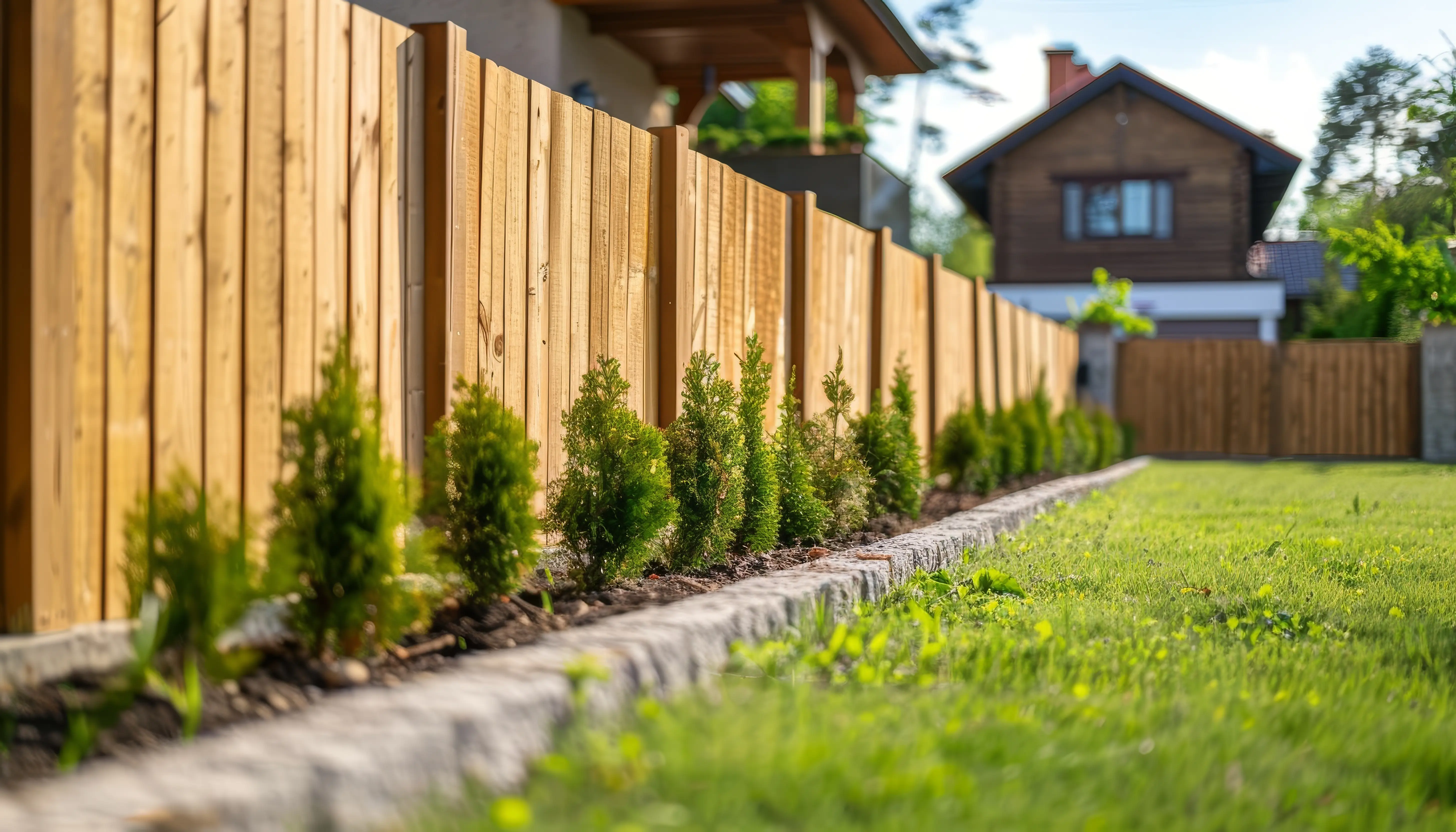
A board-on-board fence uses overlapping boards instead of placing each board tightly side by side. The boards are installed so that one board covers the small space between the boards next to it. The result is a layered fence with no direct gaps to see through.
This overlapping design is what sets board-on-board apart. It creates depth, texture, and a more substantial look than a single row of boards.
Why Gaps Happen in Other Fence Styles
To understand why board-on-board fences are so popular, it helps to know what happens to wood over time. Wood naturally shrinks and expands as it dries and absorbs moisture. In East Texas, with our humidity, rain, and hot, dry spells, this movement is common.
On a traditional side-by-side privacy fence, boards are placed tightly together. As the wood shrinks, small gaps can form between the boards, reducing privacy. Board-on-board construction helps solve this problem because the overlapping boards continue to cover those spaces even as the wood moves.
10 Reasons Homeowners Love Board-on-Board Fences
1. Excellent Privacy
The overlapping design helps prevent gaps, so neighbors and passersby cannot see into your yard. That makes board-on-board one of the best choices for homeowners who want maximum privacy.
2. Privacy That Holds Up Over Time
Because the boards overlap, privacy is maintained even as the wood naturally shrinks. This is a big advantage over styles where gaps can open up as the fence ages.
3. A Layered, Textured Look
The overlapping boards create shadows and depth, giving the fence a more dimensional appearance than a flat side-by-side fence.
4. A Substantial, High-End Appearance
Board-on-board fences look solid and well-built. Many homeowners feel this style gives their property a more custom, upscale look.
5. Strong Curb Appeal
A board-on-board fence with cap and trim can be a standout feature for your home, especially in neighborhoods where curb appeal matters.
6. Better for Pets
No gaps means fewer opportunities for dogs to see distractions on the other side or squeeze their noses through. It can help reduce barking at people and animals passing by.
7. A Sense of Seclusion
The solid, gap-free design creates a strong sense of enclosure that makes your backyard feel like a private retreat.
8. Works Well With Finishing Details
Board-on-board fences pair beautifully with cap and trim boards, decorative post caps, and custom gates.
9. Complements Many Home Styles
From traditional and ranch-style homes to farmhouses and updated homes, board-on-board fences fit a wide range of architectural styles.
10. Great for Busy Areas
If your home backs up to a road, alley, or busy neighborhood, the solid privacy of a board-on-board fence helps block views and create a calmer backyard.
How Board-on-Board Compares to Other Styles
Side-by-Side Privacy Fences
Side-by-side fences place boards tightly next to each other. They provide strong privacy at first, but small gaps can form as the wood shrinks. They usually use fewer boards than board-on-board.
Shadowbox Fences
Shadowbox fences alternate boards on opposite sides of the rails with slight spacing. They look attractive from both sides and allow some airflow, but they provide partial privacy rather than complete coverage.
Horizontal Privacy Fences
Horizontal fences run the boards side to side for a modern look. They can provide strong privacy when boards are tightly spaced, but they create a very different style.
Board-on-board stands out for homeowners who want maximum privacy with a classic, layered look.
What to Consider Before Choosing Board-on-Board
It Uses More Material
Because the boards overlap, a board-on-board fence typically requires more boards than a side-by-side fence. This can increase the overall project cost.
It Is Heavier
More boards means more weight. Strong posts and proper installation are important so the fence stays straight and sturdy for years.
Wind Exposure
Like any solid privacy fence, a board-on-board fence catches the wind. During East Texas storms, posts must be set properly to handle the pressure.
Maintenance
Staining and sealing a board-on-board fence takes care because there are more board edges and overlapping surfaces to cover. Regular maintenance helps protect the wood and keep it looking great.
HOA and City Requirements
Some neighborhoods have rules about fence height, style, and which side faces out. Check your HOA and city requirements before building.
Who Is Board-on-Board Best For?
A board-on-board privacy fence may be a great fit if you:
- Want maximum privacy with no gaps
- Have close neighbors or back up to a road or alley
- Have dogs that react to things on the other side of the fence
- Want a substantial, high-end look
- Plan to stay in your home long-term and want privacy that holds up
Design Options for Board-on-Board Fences
Cap and Trim
Adding a top cap and trim board gives your fence a polished, finished appearance and helps protect the top edges of the boards.
Decorative Post Caps
Post caps add a custom touch and help protect the tops of posts from moisture.
Matching Gates
Gates built in the same board-on-board style keep privacy consistent and create a cohesive look. Gates should be framed and supported properly to prevent sagging.
Stain Colors
Stain enhances the layered look of a board-on-board fence and helps protect the wood. Choose a color that complements your home and outdoor spaces.
Height
Board-on-board fences are commonly built at heights that provide strong backyard privacy. Check local rules before choosing your height.
What to Expect During Installation
A quality board-on-board fence starts with a solid foundation. At Rise Decks & Fence, installation typically includes:
- Consultation and estimate to understand your goals
- On-site measurements and a review of terrain and gate locations
- Removal and haul-away of your old fence, if needed
- Laying out corner posts to set the fence line
- Setting posts for strength and alignment
- Installing runners to support the boards
- Attaching the overlapping boards
- Adding gates and finishing details like cap and trim
- Cleanup and final walkthrough
Caring for Your Board-on-Board Fence
To keep your fence looking great and performing well:
- Stain and seal regularly with staining and sealing to protect against UV exposure and moisture.
- Keep sprinklers from spraying the fence.
- Trim plants and vines away from the boards.
- Inspect posts, gates, and hardware once or twice a year.
- Check after storms for damage.
Common Mistakes to Avoid
- Choosing weak posts for a heavy board-on-board fence
- Skipping cap and trim if you want a finished look
- Ignoring HOA rules about style and orientation
- Forgetting to plan gates that match the fence
- Skipping wood protection after installation
Build a Board-on-Board Fence With Rise Decks & Fence
At Rise Decks & Fence, we build durable privacy fences designed to protect your yard and give your home the finished look it deserves. Our installation process focuses on doing the job right from the ground up, from laying out corner posts to adding custom gates and finishing details. When replacing an old fence, we handle removal and haul-away.
We serve homeowners in Tyler, Lindale, Bullard, Flint, Whitehouse-free service areas like Chandler and Brownsboro, and surrounding East Texas communities. Visit our FAQ page for more answers.
Board-on-Board Fence FAQs
What is a board-on-board fence?
A board-on-board fence uses overlapping boards so there are no direct gaps between them, providing excellent privacy.
Is board-on-board better than side-by-side?
Board-on-board helps maintain privacy as wood shrinks over time, while side-by-side fences can develop small gaps.
Is a board-on-board fence more expensive?
It typically uses more boards than a side-by-side fence, which can increase the cost.
Does a board-on-board fence need special maintenance?
It benefits from regular staining and sealing like any wood fence. The overlapping boards mean there are more edges to protect.
Can I add a gate to a board-on-board fence?
Yes. Gates can be built in the same style to maintain privacy and a cohesive look.


