




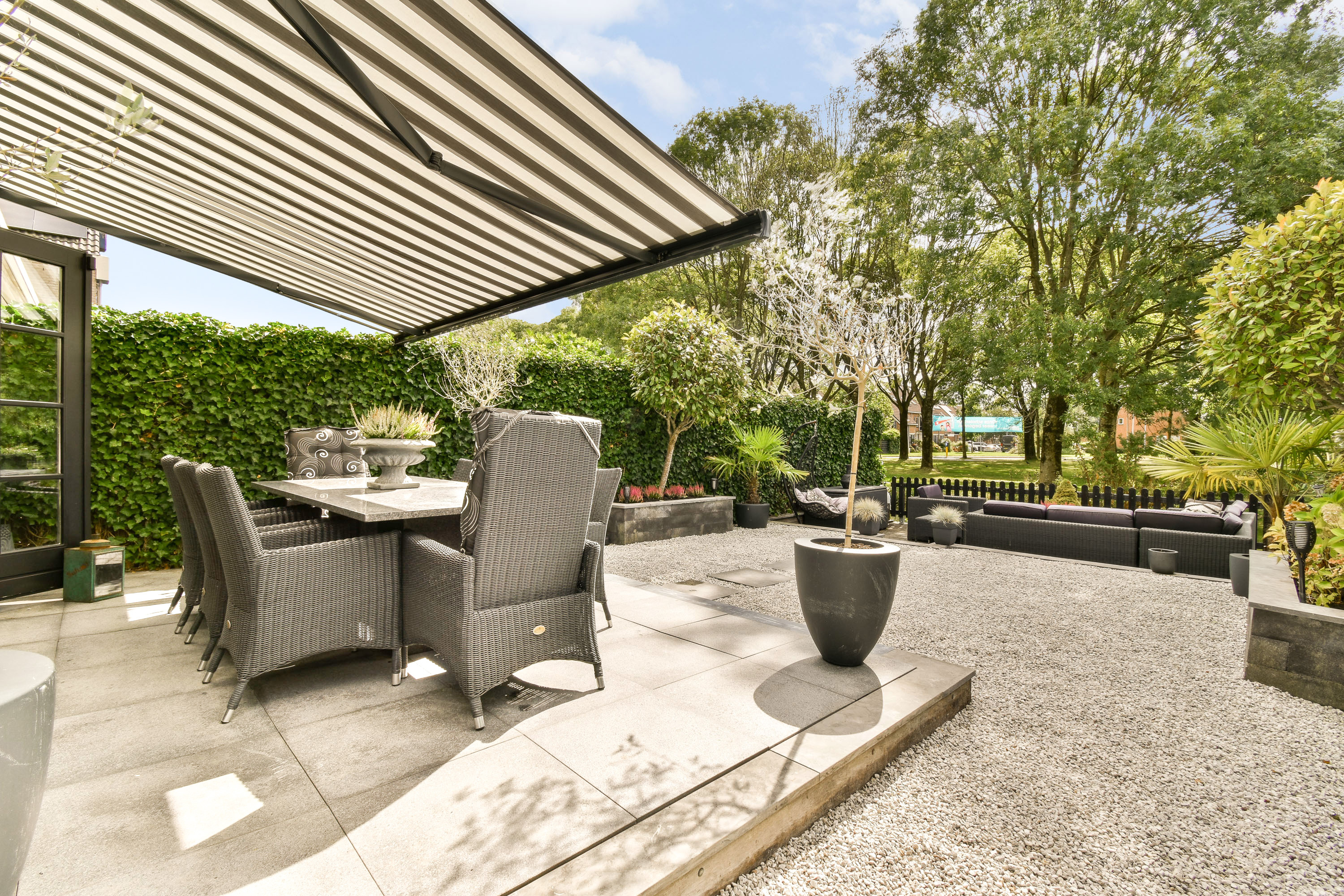
Once you decide to add a patio cover, one of the first questions is where it will go and how it will be built. Should it attach to your house and extend your roofline, or stand on its own somewhere in the yard? Both options can create beautiful, comfortable outdoor spaces, but they work in different ways and fit different needs.
Choosing the right type comes down to how you plan to use the space, the layout of your yard, your home’s roofline, and where you need shade most. Here is how to decide between an attached or freestanding patio cover for your East Texas home.
What Is an Attached Patio Cover?
An attached patio cover connects to your home on one side, usually along an exterior wall or roofline, and is supported by posts on the other side. It extends your living space directly from the house.
What Is a Freestanding Patio Cover?
A freestanding patio cover is supported entirely by its own posts and does not connect to your home. It can be placed almost anywhere in the yard.
Benefits of an Attached Patio Cover
Convenience
An attached cover sits right outside your door, making it easy to step outside for coffee, dinner, or a quick break.
Natural Flow From the House
It creates a seamless transition between indoor and outdoor living, especially when placed outside the kitchen or living room.
An Extension of Your Home
When designed to match your roofline and exterior, an attached cover looks like it was always part of the house.
Shade for Doors and Windows
An attached cover can shade nearby doors and windows, reducing direct sun on that side of the home.
A Sheltered Entry
It gives you a dry place to come and go during rain.
Considerations for Attached Patio Covers
The Connection Must Be Built Right
The connection to your home must be strong and built so water does not get trapped or leak into the house. This requires careful planning and construction.
Roofline and Eave Height
On some homes, especially single-story homes with low eaves, the height available for an attached cover may be limited. Your builder can explain options for your roofline.
Home Condition
The exterior wall or roof where the cover connects needs to be in good condition.
Indoor Light
An attached cover can reduce natural light coming into nearby windows.
Drainage Near the House
Water running off the cover needs to be directed away from your foundation.
Benefits of a Freestanding Patio Cover
Flexible Placement
A freestanding cover can go almost anywhere: near the pool, at a fire pit, in the garden, or where it frames the best view.
Independent From the House
Because it does not connect to the home, roofline height and exterior wall condition are not limiting factors.
Creates a Destination
A freestanding cover gives people a reason to explore and use more of the yard.
Great for Large Yards
On bigger properties, a freestanding cover can create a separate outdoor room away from the house.
Considerations for Freestanding Patio Covers
Distance From the House
Carrying food and drinks may take longer. Paths and lighting help.
Utilities
If you want power or lighting at a freestanding cover, planning is needed, and electrical work should be done by a licensed electrician.
Wind Exposure
Covers placed in open areas of the yard may face more wind and need solid construction.
How to Decide
Ask yourself:
How Will You Use the Space?
If you want an outdoor dining room off the kitchen, an attached cover is often ideal. If you want a poolside retreat or fire pit area, a freestanding cover may be better.
Where Do You Need Shade?
If the patio right outside your door gets blasted by afternoon sun, an attached cover can solve that problem. If you need shade in another part of the yard, freestanding may be the answer.
What Does Your Roofline Allow?
Low eaves or complex rooflines can affect attached cover options. A builder can evaluate your home.
What Is Your Yard Layout?
Consider views, trees, slopes, and where you naturally gather.
Which Direction Does the Sun Come From?
In East Texas, west-facing areas get intense afternoon heat. Place your cover where it blocks the sun when you use the space most.
What Are Your Future Plans?
Are you planning a pool, outdoor kitchen, or deck? Plan your cover so it works with future projects.
Are There Local Requirements?
Check HOA rules and setbacks before deciding on placement.
Example Scenarios
Family dinners outside: An attached cover off the kitchen makes serving easy.
Poolside lounging: A freestanding cover near the pool provides shade where it is needed.
Large backyard with a view: A freestanding cover placed to frame the view creates a destination.
Small backyard: An attached cover often makes the most efficient use of limited space.
The Best of Both Worlds
Many homeowners combine options. An attached patio cover near the house provides convenient shade, while a freestanding pergola elsewhere in the yard adds another gathering spot.
Things Both Types Need
- Proper drainage to keep water away from seating and foundations
- Planning for fans and lighting if desired
- Wood protection with staining and sealing
- Regular inspections to keep the structure in good shape
How Long Does It Take to Build a Patio Cover?
Many patio cover projects can be completed in approximately 3 to 5 working days, depending on size, design, materials, and site conditions.
Common Mistakes
- Choosing a location without considering sun direction
- Ignoring roofline limitations for attached covers
- Placing a freestanding cover too far from the house without paths or lighting
- Forgetting drainage
- Not planning for future projects
Choose the Right Patio Cover With Rise Decks & Fence
At Rise Decks & Fence, we build custom patio covers and pergolas designed to protect your outdoor space from the Texas sun and unpredictable weather. We visit your property, evaluate your roofline and yard layout, and help you decide whether an attached or freestanding cover fits your needs. We can also build covers over new or existing custom decks, and our fence team can complete your backyard.
We serve Tyler and surrounding communities, including Lindale, Brownsboro, Jacksonville, Van, and Gun Barrel City. Learn more on our About page or visit our FAQ page.
Attached and Freestanding Patio Cover FAQs
Which is better, an attached or freestanding patio cover?
It depends on how you use the space, where you need shade, and your home’s roofline.
Can any house have an attached patio cover?
Most can, but roofline height and the condition of the exterior wall affect options. A builder can evaluate your home.
Where can a freestanding patio cover go?
Almost anywhere in the yard, such as near a pool, fire pit, garden, or view, as long as it meets local requirements.
Can I have both?
Yes. Many homeowners combine an attached cover with a freestanding pergola or cover.
Do freestanding covers need electricity?
Only if you want lights or fans. Electrical work should be handled by a licensed electrician.


